


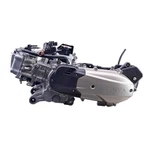
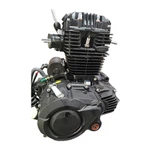
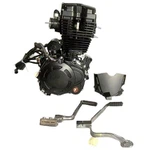
ATV Engines


CHONGQING SHENGWAN MOTORCYCLE CO.,LTD
Stablished in chongqing, China , We focus on the research and development, sales and after-sales service of motorcycles engines and engines' parts .Our company have employs experienced technical and management personnel, Sales and After sales team.With high quality products and perfect after- sale service,it has won trust and support of customers all over the word.
Why Choose Us
Professional team
Professional sales team and engineer team provide professional technical Support,Test video and Sample support .
One-stop Solution
With rich experience and one-to-one service,we can help you choose products and answer technical questions.
Commitment to quality
We're committed to quality and concrete actions. That means we always deliver solutions in a professional and practical way.
World-wide expertise
We know international markets and trends. Our expertise, experience and network cover all corners of the world.

ATVs use one of two types of engines: two-stroke ATV engines and four-stroke ATV engines. Most modern ATVs use four-stroke engines, but even those that use two-stroke engines are an upgrade from early ATVs. The 'stroke' refers to the number of rotations the engine piston must make.
5 Signs That Your ATV Bike Engine Needs Replacement
Loss of Power
ATV bikes use internal combustion engines. They use a four-stroke combustion cycle to turn gas into power that runs your vehicle. Intake stroke, compression stroke, the combustion stroke, and exhaust stroke are the four strokes. If any of these strokes is experiencing a hiccup, then your engine will lose power.
The piston is the most critical component of the engine, used in ATV bikes. Typically a four-stroke engine's piston and ring need to be replaced every 15-30 hours of use. Check the service manual to know your bike's piston replacement threshold.
Reduction in the Mileage
If you begin to notice that your bike is not giving as many miles per gallon of gas as earlier, then you need to worry about your engine's health. It could be a result of problems in the compression stroke of your engine.
A fuel cleaner may help solve the problem temporarily, but it is best to get the engine checked out. Don't wait too long after the signs of low mileage begin to appear.
Stalling Engine
This is highly unusual and is a result of a problem in the engine. It will probably be due to the intake stroke not receiving the right spark. Get the vehicle checked out immediately. If unchecked, it can lead to more significant issues in the future.
Off Odors or Smell
If you begin to notice off smells while the engine is running or after it is turned off, it can be a sign of engine failure. Please don't ignore this as it may be due to problems in the exhaust stroke.
An internal leak can cause the coolant to burn and give out a sweet smell and white smoke from the exhaust. If the head gasket or intake gasket has cracks, it can result in the leak. Have your 125cc 4 stroke engine replaced immediately.
Ticking Noise in Engine
When your bike's engine is failing, it will result in a ticking noise. This is because of the oil burning off. Clogs or old spark plugs can be the reason for this. A low battery or improper octane in gasoline can also cause this.
The engine will have its usual noises, but when the cam chains are stretched, or if there is not enough tension on the chain, it can increase the intensity of the sound. It may require that you change the engine immediately.
The Basics of Combustion Engines
Just like most vehicles, most ATVs feature a combustion engine. This kind of engine runs on fuel that is mixed with air in a combustion chamber and ignited by a spark. The spark creates a small, controlled explosion that is converted to mechanical action by the piston.
The piston is a small cylinder inside the engine that is connected to the crankshaft. When combustion occurs, the piston moves up and down, which causes the crankshaft to turn. The crankshaft converts the force generated by the engine into rotary motion. That motion is then transferred to the wheels via the drivetrain. This is what propels your ATV forward!
Two-Stroke Engines
There are two main options for ATV engines: two-stroke engines and four-stroke engines.As you might expect, two-stroke engines only require two strokes to complete one revolution of the crankshaft. This means that in a two-stroke engine, the intake and exhaust functions occur at the same time.
Two-stroke engines can accelerate faster than four-stroke engines. Because they do not use an oil reservoir, two-stroke engines also require less frequent maintenance.they are less reliable and efficient compared to four-stroke engines.
Four-Stroke Engines
Four-stroke engines have four distinct piston strokes for intake, compression, power, and exhaust. This is the kind of engine most often used in most cars, trucks, and motorcycles. Four-stroke engines can operate at lower RPMs than two-stroke engines, which reduces wear and tear. This is why four-stroke engines tend to be more durable. They are also smoother and quieter than two-stroke engines, and they burn less fuel.
ATV Engine Common Myths
There are several misconceptions about how these engines work and the ways in which that affects their efficiency. The most confusing concerns engine lubrication. All engines need to be lubricated in order to run, otherwise their metal parts will wear on each other and eventually stop working. This is why one of the most important things you can do to maintain the health and longevity of your vehicle is check its oil on a regular basis.
Four-stroke engines are lubricated by holding oil in a sump pump. Oil is distributed from this sump pump through either a splashing action, in which the movement of the crankshaft rotating in and out of the oil in the sump "splashes" oil to the engine's components, or through pressurized lubrication provided by the pump.
Two-stroke engines on the other hand cannot use a sump pump lubrication system because their inlet and outlet (exhaust) bores are located on the sides of the cylinder—the bores would become blocked. Oil and gasoline are either mixed together before being poured into the fuel tank, or the two-stroke utilizes some kind of oil injection system.
If you use a high-quality two-stroke oil, there is no reason why your ATV's two-stroke engine shouldn't last as long as a four-stroke.
People will also try to tell you that two-stroke engines produce more emissions than four strokes. In general, this is true. But huge advances in technology have made two-strokes able to run nearly as cleanly as four-strokes.
Two-stroke engines do require more maintenance because they fire more and run hotter. You can expect to re-do the heads every few seasons. Fortunately, two-stroke engines are much simpler and therefore easier to work on.
How to choose the right ATV engine for your needs
What type of terrain will you be riding on
If you’ll be doing a lot of off-roading, a two-stroke engine may be a better choice because it’s lighter weight and easier to maneuver. However, if you’ll be mostly riding on paved roads, a four-stroke engine will provide more power and smoothness.
How much power do you need
Four-stroke engines typically have more power than two-strokes, so if you’re looking for a high-performance ATV, a four-stroke may be the way to go. However, two-strokes can offer more power at higher engine speeds, so if you’re mostly interested in top speed, a two-stroke may be the better choice.
What is your budget
Four-stroke engines typically cost more than two-strokes, so if you’re on a tight budget, a two-stroke may be the way to go. However, four-strokes require less maintenance and typically last longer, so they may be worth the extra cost in the long run.
How often will you use your ATV
If you only ride occasionally, a four-stroke engine may be a better choice because it’s less likely to need repairs. However, if you ride often or for long periods of time, a two-stroke may be a better choice because it’s easier to keep running smoothly.
What is your riding style
If you like to go fast and take risks, a two-stroke engine may be a better choice because it can offer more power at high speeds. However, if you prefer a smooth ride and sticking to trails, a four-stroke engine will provide more low-end power and torque.
What is the climate like where you live
If you live in an area with hot summers, a four-stroke engine may be a better choice because it doesn’t overheat as easily. However, if you live in an area with cold winters, a two-stroke engine may be a better choice because it starts more easily in cold weather.

Listening for the Click
When attempting to start the quad bike, listen for a clicking sound near the solenoid. If you hear the click, the solenoid is likely functioning correctly.
Multimeter Testing
If you don't hear the click, use a multimeter to test the solenoid for proper voltage.
If the voltage is low or non-existent, the solenoid may need to be replaced.
Our Factory
At present, our products are 50CC---350CC air-cooled and water-cooled series two-wheeled vehicles, tricycles and some special engines for off-road vehicles, which are favored by the market with best sales nationwide and comply international standards and exported to Southeast Asia, Europe, the United States and foreign markets.
