


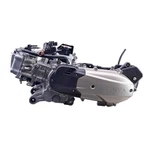
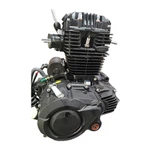
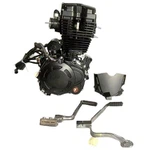
Motorcycle Engine


CHONGQING SHENGWAN MOTORCYCLE CO.,LTD
Stablished in chongqing, China , We focus on the research and development, sales and after-sales service of motorcycles engines and engines' parts .Our company have employs experienced technical and management personnel, Sales and After sales team.With high quality products and perfect after- sale service,it has won trust and support of customers all over the word.
Why Choose Us
Professional team
Professional sales team and engineer team provide professional technical Support,Test video and Sample support .
One-stop Solution
With rich experience and one-to-one service,we can help you choose products and answer technical questions.
Commitment to quality
We're committed to quality and concrete actions. That means we always deliver solutions in a professional and practical way.
World-wide expertise
We know international markets and trends. Our expertise, experience and network cover all corners of the world.

A motorcycle engine is an engine that powers a motorcycle. Motorcycle engines are typically two-stroke or four-stroke internal combustion engines, but other engine types, such as Wankels and electric motors, have been used.
How Motorcycles Work
Motorcycle engines work the same way that car engines do. They consist of pistons, a cylinder block and a head, which contains the valve train. The pistons move up and down in the cylinder block, driven by explosions of a fuel-air mixture that has been ignited by a spark. Valves open and close to allow the fuel-air mixture to enter the combustion chamber. As the pistons move up and down, they turn a crankshaft, which transforms the energy from the pistons into rotary motion. The rotational force of the crankshaft is transmitted, via the transmission, to the rear wheel of the motorcycle.
Motorcycle engines are generally classified by one of three characteristics: the number of cylinders they possess, the capacity of their combustion chambers or the number of strokes in their power cycles.
Cylinders
Motorcycle engines can have between one and six cylinders. For years, the V-twin design was the engine of choice for motorcycle engineers in America, Europe and Japan.
The V-twin is just one way to accommodate two cylinders. When the cylinders are oriented so that the pistons oppose each other, the result is an opposed-twin design. Parallel-twin engines have their pistons placed side by side in an upright position.
Today, the most popular design is the four-cylinder, which runs more smoothly and at higher revolutions per minute (rpms) than a comparable twin. The four cylinders can be placed in a row, or they can be arranged in a V-shape configuration, with two cylinders on each side of the V.
Capacity
The size of the combustion chamber in a motorcycle engine is directly related to its power output. The upper limit is about 1500 cubic centimeters (cc), while the lower limit is about 50 cc. The latter engines are usually found on small motorcycles (mopeds) that offer 100-miles-to-the-gallon fuel economy but only reach top speeds of 30 to 35 miles per hour.
Different Types Of Motorcycle Engines


Single Cylinder Engines
The best engines for small bikes with a small cubic capacity are single cylinders. If something goes wrong, maintaining and fixing them is not expensive.
The camshaft in a Pushrod engine sits between the cylinder heads. Through a chain or gear system, the crankshaft is connected to the camshaft so that when the crankshaft turns, the camshaft also turns. Lifters push pushrods that open and close valves when the camshaft spins. While the torque is higher at lower rpms, the engine fails to reach higher RPMs.
Pros: These types of bike engines are small, lightweight, inexpensive, and have high torque at low speeds.
Two-Cylinder Engines
Two-cylinder engines, as their name implies, have two cylinders. More cylinders mean more weight, more cost, and more power. Let us examine different motorcycle engine types under two-cylinder.
Parallel Twin Engine
The parallel-twin Engine has two cylinders arranged on a common crankshaft. Generally, you can find these types of engines in models with a medium or high displacement. Among the engines, you can find examples: Kawasaki Ninja 300,650 and RE Interceptor 650.
Pros: These parallel twin engines have comfort, high performance, fluid operation, and good balance.
A V-twin engine is a two-cylinder piston engine with a V-shaped crankshaft and two cylinders. As the name implies, the arrangement of two cylinders is in a "V" shape. In addition to being widely associated with motorcycles (installed either longitudinally or transversely), you can see the usage of V-twin engines in several small cars and industrial engines. Bikes like Harley Davidson usually have these engines.
Pros: These types of motorbike engines have good power or size ratio and are lightweight.
L Twin Engine
Twin-cylinder engines with an angle of 90% between their cylinders are known as L twin engines. Power and weight are similar to those of V twin engines. By using L twin engines in most of their models, Ducati made them famous.
Pros : These engine types have similar pros, like V twin engines.
Boxer Engine
"Flat twin engines" are also known as boxer engines. It is common for flat engines to have a "boxer" configuration, in which opposing pistons move inward and outward simultaneously. The movement is akin to the punching movement by boxers.
Because boxer engines are the only standard configurations that do not have unbalanced forces, they have low vibrations. The reciprocating parts of boxer engines do not require a balance shaft or counterweights on the crankshaft to balance their weight. Many BMW models, such as the 1250GS, use these legendary engines.
Pros: These engines have good balance and excellent air cooling.
Triple-cylinder Engines
Straight-three engines have three cylinders in a line along the crankshaft. They are also known as inline-three engines or inline-three engines.
They are medium-sized engines between V-twins and in-line fours. Compared to V-twin engines, triple-cylinder engines run smoother and are narrower & lighter. Furthermore, they deliver torque and power like twin-cylinder engines. Unlike Triumph bikes such as Street Triple and Yamaha MT-09s, few motorcycles have these engines.
Pros: These engines have excellent fluid operation, comfort, and high performance.
Four-cylinder Engines
This range is quite popular among Indian bike owners. Four-cylinder engines usually produce a loud sound from the exhaust you probably may remember from your childhood. Engines with four cylinders come in a variety of types.
In-line Four Engine
A straight or in-line four-engine consists of one row of cylinders with no offset. As well as being smaller, in-line four engines can be mounted in any direction and have smaller physical dimensions than designs. A straight configuration is more straightforward than a V-shaped one. As a child, this was the exhaust sound you could identify on a superbike.
Pros: These engine types have a good balance, high power, and low vibrations.
V-Four Engine
The V4 Engine has four cylinders arranged in a V configuration and shares a common crankshaft. These engines are much less common than in-line fours. A 90-degree V-angle and optimal firing interval reduce vibration when used with a V4 with a shorter length.
Pros: These engines offer high performance, overall dimension, low vibrations, and good balance.
Straight Six Engine
The engines are like flat twins (boxers) but have more cylinders. Outside of large touring models, these engines are relatively rare. In the modern era,
Pros: These engines have smooth operation and lots of torque.
Today, almost all commercially available motorcycles are driven by conventional gasoline internal combustion engines, increasingly 4-strokes in all size ranges. This is because 4 stroke engines are more fuel efficient, cause less emissions and have a longer life than 2-stroke engines. In a 4-stroke engine, the working cycle is completed in 4-strokes of the piston or two revolutions of the crankshaft. This is achieved by carrying out suction, compression, expansion and exhaust processes in each stroke. The 4-strokes of a petrol engine sucking fuel-air mixture are described below.
Suction or Charge Stroke: In this stroke, the inlet valve opens and a mixture of fuel and air is forced by atmospheric pressure into the cylinder through the intake port. The piston descends from the top of the cylinder to the bottom of the cylinder.
Compression Stroke: In this stroke, both the valves are closed and the fuel-air is compressed as the piston moves upwards. This completes one revolution of the crank shaft.
Expansion or Working Stroke: Shortly after the piston reaches the top (during the compression stroke), the compressed air-fuel mixture is ignited, usually by a spark plug. The resulting massive pressure from the combustion of the compressed fuel-air mixture drives the piston back down with tremendous force. This is the is the main source of the engine's torque and power.
Exhaust Stroke: In this stroke, the exhaust valve is open as the piston moves to top. This movement of the piston pushes out the products of the combustion from the engine cylinder through the exhaust valve into the atmosphere. 'This completes one cycle'


Motorcycle engines are pretty much like other internal combustion engines, except that in most applications, the engine share the crankcase with the clutch and transmission.
I have worked on and ridden both bicycles, and motorcycles, and they stay upright at speed due to a combination of forward momentum and gyrosopic forces.
The actual handling characteristics are affected by spring rates, tire design, wheelbase, and fork rake. A sport bike will have a short upright wheelbase with a high center of gravity and minimal rake and are extremely maneuverable with sticky tires. A cruiser will have a relatively long wheelbase with softer springs and tires. Unlike a sports bike, a cruiser or touring bike can be ridden in relative comfort for hours by your typical middle aged couch potato with gentler and more predictable handling, and a softer ride, but can be a handful at parking lot speeds.
What is motorcycle engine wear
The moment a motorcycle leaves the factory and reaches its owner for its first ride, engine wear begins. Engine wear occurs when contaminants slip through the filtration systems and attack the inside of the motorcycle engine. Engine wear can also be brought on by chemicals, metal-to-metal contact, and general mechanical stress from daily use.
How to prevent engine wear
Regular maintenance and proper usage of the motorcycle are keys to preventing engine wear. Make sure you use top-quality oil and air filters to protect your engine against foreign contaminants. You should also only use the recommended motor oil for the particular brand and motorcycle. Taking regular short trips can also be tough on your motorcycle engine, so try to avoid those when you can.
If you want your motorcycle to last a long time, you're going to need to be diligent with cleaning and maintenance procedures. Taking care of a motorcycle engine is not necessarily a glamorous affair. Even so, you will thank yourself down the line. Imagine spending more than a decade riding your bike and it's humming along just as steadily as the day you bought it. There's a certain pride that comes along with keeping a motorcycle in top shape. It's almost a badge of honor among riding groups, as it shows an admirable level of passion and dedication.
How long a motorcycle engine lasts depends on many factors, but if given the proper care and maintenance that it needs, a decade or more of use is not impossible. Many older motorcycles are still out there plying the roads, and in some regards, they run just as good, if not better, than what today's best has to offer.
Addressing Common Motorcycle Engine Problems
Poor Fuel Economy
Symptoms: Decreased mileage, frequent refueling.
Causes: Clogged air filters, fuel system issues, incorrect carburetor tuning, or spark plug problems.
Solutions: Replace air filters, clean fuel lines, adjust carburetor settings, or replace faulty spark plugs.
Starting Issues
Symptoms: Difficulty starting the engine, slow cranking, or failure to start.
Causes: Weak battery, faulty starter motor, fuel system issues, or ignition problems.
Solutions: Check battery health, inspect starter motor, ensure proper fuel flow, and inspect ignition components.
Overheating
Symptoms: Engine temperature rising above normal range, steam or smoke from the engine.
Causes: Low coolant levels, cooling system leaks, faulty thermostat, or riding in high temperatures/traffic.
Solutions: Replenish coolant, repair leaks, replace faulty thermostat, and avoid prolonged idling or riding in extreme conditions.
Knocking or Pinging Sounds
Symptoms: Audible knocking or pinging noises during engine operation.
Causes: Low-quality fuel, improper ignition timing, carbon buildup, or pre-ignition.
Solutions: Use higher octane fuel, adjust ignition timing, perform carbon cleaning, or address underlying pre-ignition issues.
Loss of Power
Symptoms: Reduced acceleration, sluggish performance, or inconsistent power delivery.
Causes: Clogged air/fuel filters, fuel system issues, ignition problems, or worn-out engine components.
Solutions: Replace filters, clean fuel lines, inspect ignition components, and perform a thorough engine inspection for worn-out parts.
Excessive Exhaust Smoke
Symptoms: Abnormal smoke emissions (black, white, or blue) from the exhaust.
Causes: Oil burning, coolant leaks, or improper fuel combustion.
Solutions: Address oil leaks, coolant issues, or fuel mixture problems. Perform necessary repairs based on smoke color and type.
Our Factory
At present, our products are 50CC---350CC air-cooled and water-cooled series two-wheeled vehicles, tricycles and some special engines for off-road vehicles, which are favored by the market with best sales nationwide and comply international standards and exported to Southeast Asia, Europe, the United States and foreign markets.
