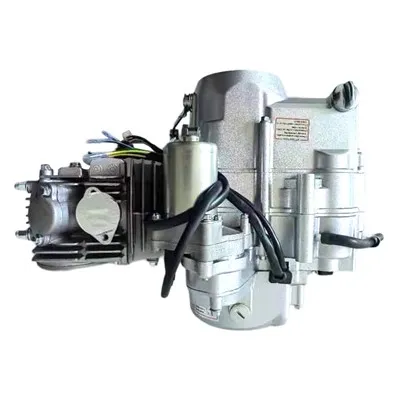
As a supplier of 110 cylinders, I've encountered numerous inquiries regarding the disparities between a 110 cylinder and a regular cylinder. This blog post aims to delve into these differences comprehensively, offering insights for enthusiasts, mechanics, and potential buyers.
Understanding the Basics: Cylinder Function
Before we explore the differences, it's essential to understand the fundamental role of a cylinder in an engine. In an internal combustion engine, the cylinder is a critical component where the combustion process occurs. It houses the piston, which moves up and down within the cylinder bore. The up - and - down motion of the piston is converted into rotational motion by the crankshaft, ultimately powering the vehicle.
Physical Dimensions
One of the most noticeable differences between a 110 cylinder and a regular cylinder lies in their physical dimensions. A 110 cylinder is typically designed for small - displacement engines, often found in scooters, small motorcycles, or light - duty motorized vehicles. These cylinders usually have a smaller bore diameter and stroke length compared to regular cylinders used in larger engines.
For example, a regular cylinder in a mid - sized motorcycle engine might have a bore diameter of around 60 - 70mm or more, while a 110 cylinder usually has a bore diameter in the range of 50 - 55mm. The smaller dimensions of the 110 cylinder contribute to its lower displacement, which in turn affects the engine's power output and performance characteristics.
Power Output and Performance
The power output of an engine is closely related to the cylinder's displacement. Displacement is calculated by multiplying the cross - sectional area of the cylinder bore by the stroke length and the number of cylinders. Since a 110 cylinder has a smaller displacement, it generally produces less power compared to a regular cylinder with a larger displacement.
A regular cylinder in a high - performance motorcycle engine can generate several tens of horsepower, enabling the vehicle to reach high speeds and accelerate quickly. In contrast, a 110 - cylinder engine usually produces around 5 - 8 horsepower. This makes 110 - cylinder engines more suitable for urban commuting, where lower speeds and better fuel efficiency are prioritized.
However, the lower power output also means that 110 - cylinder engines are more fuel - efficient. They require less fuel to operate, as the smaller combustion chamber consumes less air - fuel mixture per cycle. This makes them an economical choice for daily use, especially in areas with high fuel prices.
Compression Ratio
The compression ratio is another factor that differs between a 110 cylinder and a regular cylinder. The compression ratio is the ratio of the volume of the combustion chamber when the piston is at the bottom of its stroke (bottom dead center) to the volume when the piston is at the top of its stroke (top dead center).
110 cylinders often have a relatively high compression ratio. A high compression ratio can improve the engine's thermal efficiency, which means more of the fuel's energy is converted into mechanical work. This is beneficial for small - displacement engines like those with 110 cylinders, as it helps to compensate for their lower power output.


Regular cylinders, especially those in high - performance engines, may have a compression ratio that is optimized for power rather than efficiency. They might have a lower compression ratio to prevent engine knocking at high - power operation, which can damage the engine.
Cooling Requirements
The cooling requirements of a 110 cylinder and a regular cylinder also vary. Due to their smaller size and lower power output, 110 cylinders generate less heat during operation. As a result, they can often rely on air - cooling systems, which are simpler and more cost - effective. Air - cooling involves fins on the outside of the cylinder that dissipate heat into the surrounding air as the vehicle moves.
On the other hand, regular cylinders in larger engines, especially those with high power outputs, generate a significant amount of heat. These engines usually require liquid - cooling systems, which use a coolant (such as water or a water - glycol mixture) to absorb and transfer heat away from the cylinders. Liquid - cooling systems are more complex and expensive but are necessary to maintain the engine's temperature within a safe operating range.
Spare Parts and Compatibility
When it comes to spare parts, there are also differences between 110 cylinders and regular cylinders. As a 110 cylinder supplier, I offer a range of spare parts specifically designed for 110 - cylinder engines. For example, you can find Crankcase Body For 152FMH 110cc 125cc Engines Motorcycle Spare Parts, which is suitable for 110 - cylinder engines. These parts are engineered to fit the unique dimensions and specifications of 110 cylinders.
Regular cylinders, on the other hand, have their own set of spare parts that are designed for larger engines. The parts for regular cylinders are generally larger and more robust to withstand the higher stresses and forces generated by larger engines. It's important to note that spare parts for 110 cylinders are not interchangeable with those for regular cylinders due to the differences in size, shape, and performance requirements.
Another important spare part is the Motorcycles Engine Overall Complete Gasket Set For 110cc 125cc 250cc. This gasket set is crucial for ensuring a proper seal between different engine components in 110 - cylinder engines, preventing leaks of coolant, oil, and combustion gases.
The Motorcycle Cylinder Head Comp is also a key component. In 110 - cylinder engines, the cylinder head is designed to work in harmony with the smaller combustion chamber and lower - power characteristics of the engine.
Cost Considerations
The cost of a 110 cylinder and its associated components is generally lower than that of a regular cylinder. This is due to several factors, including the smaller size of the 110 cylinder, the lower - grade materials used in some cases, and the lower manufacturing complexity.
For consumers on a budget or those looking for an economical transportation option, a vehicle with a 110 - cylinder engine can be a more affordable choice. Additionally, the lower fuel consumption and maintenance costs of 110 - cylinder engines further contribute to their cost - effectiveness.
Contact for Purchase and Negotiation
If you are interested in purchasing 110 cylinders or any of the related spare parts, I invite you to contact me for further negotiation. Whether you are a motorcycle repair shop, a scooter manufacturer, or an individual enthusiast, I can provide you with high - quality products and competitive prices.
References
- Automotive Engine Design: Theory and Practice, Author: John Heywood
- Motorcycle Engineering Handbook, Editor: Mark Hooper
- Small Engine Repair Manuals, Various Publishers