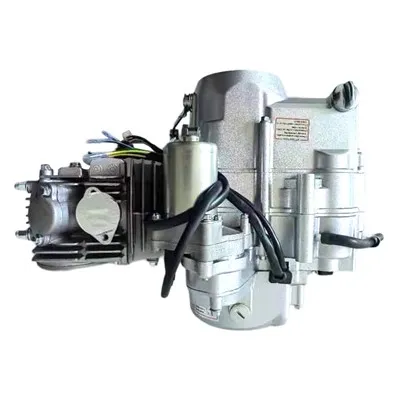
As a supplier of CB150 engines, accurately measuring the power of these engines is crucial for both product development and customer satisfaction. In this blog post, I'll share some professional insights and methods on how to measure the power of the CB150 engine accurately.
Understanding the Basics of Engine Power
Before delving into the measurement methods, it's essential to understand what engine power represents. Engine power is the rate at which the engine can do work. It is typically measured in horsepower (hp) or kilowatts (kW). In the context of the CB150 engine, power is a key indicator of its performance, affecting factors such as acceleration, top speed, and load - carrying capacity.
Dynamometer Testing
One of the most accurate ways to measure the power of the CB150 engine is through dynamometer testing. A dynamometer, or dyno for short, is a device that measures the torque and rotational speed of an engine.
Types of Dynamometers
There are two main types of dynamometers commonly used for engine testing: absorption dynamometers and inertial dynamometers.
- Absorption Dynamometers: These dynamometers work by absorbing the power produced by the engine. They can be further classified into several subtypes, such as hydraulic, electric, and eddy - current dynamometers. Hydraulic dynamometers use the resistance of a fluid to absorb the engine's power. Electric dynamometers, on the other hand, convert the engine's mechanical power into electrical power. Eddy - current dynamometers use the magnetic field to create resistance. For CB150 engine testing, electric dynamometers are often preferred due to their high accuracy and wide range of control.
- Inertial Dynamometers: Inertial dynamometers measure the engine's power by measuring the rate of acceleration of a rotating mass. They are relatively simple and inexpensive compared to absorption dynamometers. However, they are less accurate, especially for engines with variable power output characteristics like the CB150.
The Testing Process
When using a dynamometer to test the CB150 engine, the engine is first mounted securely on the dyno. The engine is then connected to the dynamometer, and the necessary sensors are installed to measure parameters such as torque, rotational speed, intake air temperature, and exhaust gas temperature.
The engine is then run through a series of test cycles. During each cycle, the engine's throttle is gradually opened from idle to full throttle, and the dynamometer measures the torque and rotational speed at different points. The power of the engine can be calculated using the following formula:
[P=\frac{T\times n}{9549}]
where (P) is the power in kilowatts (kW), (T) is the torque in Newton - meters (N·m), and (n) is the rotational speed in revolutions per minute (RPM).
Measurement of Other Parameters Affecting Power
In addition to using a dynamometer, measuring other parameters that affect engine power is also important for accurate power assessment.
Air - Fuel Ratio
The air - fuel ratio is a critical factor that affects engine power. A proper air - fuel ratio ensures complete combustion of the fuel, maximizing the power output of the engine. For the CB150 engine, an air - fuel ratio of around 14.7:1 (stoichiometric ratio) is ideal for complete combustion. However, in real - world applications, the air - fuel ratio may need to be adjusted depending on factors such as engine load and operating conditions. Tools such as wide - band oxygen sensors can be used to measure the air - fuel ratio accurately.


Intake Air Temperature
The temperature of the intake air also affects engine power. Cooler intake air is denser, which means more air can be drawn into the engine, resulting in more power. On the other hand, hot intake air is less dense, reducing the engine's power output. Therefore, it's important to measure the intake air temperature during engine testing. Thermocouples or resistance temperature detectors (RTDs) can be used to measure the intake air temperature accurately.
Exhaust Backpressure
Exhaust backpressure is the resistance that the exhaust gases encounter as they flow out of the engine. High exhaust backpressure can reduce engine power by restricting the flow of exhaust gases, which in turn affects the engine's ability to intake fresh air. Measuring exhaust backpressure using a pressure sensor can help identify if there are any issues with the exhaust system that may be affecting the engine's power output.
Calibration and Validation
To ensure the accuracy of the power measurement, calibration and validation are essential steps.
Calibration
Calibration involves adjusting the measuring instruments to ensure that they provide accurate readings. For example, the torque sensor on the dynamometer needs to be calibrated regularly to ensure that the measured torque values are accurate. This can be done by comparing the readings of the torque sensor with a known standard.
Validation
Validation involves comparing the measured power values with expected values or values obtained from other reliable sources. For example, if the CB150 engine is supposed to have a certain power output based on its design specifications, the measured power values should be within an acceptable range of these specifications. If there are significant discrepancies, further investigation is needed to identify the cause.
Importance of Accurate Power Measurement for CB150 Engine Suppliers
As a CB150 engine supplier, accurate power measurement is of utmost importance. It helps us ensure the quality and performance of our engines. By providing accurate power ratings to our customers, we can build trust and credibility in the market. Additionally, accurate power measurement allows us to optimize the engine design and manufacturing process, leading to more efficient and powerful engines.
If you are interested in our CB150 engines or other related products such as Cg125 125cc Motorcycle and Tricycle Engines for Three Wheels, Cg175 175cc Engine for Tricycle Parts Engine, and Cg125 Cg150 Tricycle Engine Air Cool for Three Wheels, please feel free to contact us for further discussion and procurement negotiation.
References
- Heywood, J. B. (1988). Internal Combustion Engine Fundamentals. McGraw - Hill.
- Taylor, C. F. (1985). The Internal - Combustion Engine in Theory and Practice. MIT Press.