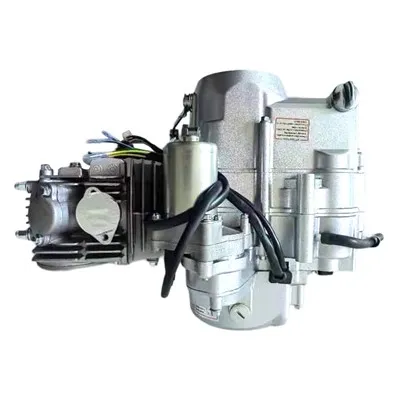
Are ATV engines air - cooled or liquid - cooled? This is a common question among ATV enthusiasts and potential buyers. As an ATV engines supplier, I've had the opportunity to work closely with both types of engines, and I'd like to share some insights on this topic.
Air - Cooled ATV Engines
Air - cooled engines have been around for a long time and are still widely used in many ATV models. The principle behind air - cooled engines is relatively simple. They rely on the flow of air over the engine's fins to dissipate heat. These fins increase the surface area of the engine, allowing more heat to be transferred to the surrounding air.
One of the main advantages of air - cooled engines is their simplicity. They have fewer components compared to liquid - cooled engines, which means there are fewer things that can go wrong. This simplicity also makes them easier and cheaper to maintain. For example, there's no need for a complex cooling system with a radiator, water pump, and hoses. This reduces the overall cost of the engine and the ATV itself, making air - cooled ATVs a more budget - friendly option for many consumers.
Another benefit of air - cooled engines is their reliability in certain conditions. They can operate well in cold climates because they don't have the risk of coolant freezing, which could damage the engine. In addition, air - cooled engines are often more compact, which can be an advantage in smaller ATVs where space is limited.
However, air - cooled engines also have some drawbacks. They are less efficient at dissipating heat compared to liquid - cooled engines, especially under heavy load or in hot weather. This can lead to overheating, which can cause engine damage over time. The performance of air - cooled engines may also decrease as they heat up, resulting in reduced power and efficiency.
Liquid - Cooled ATV Engines
Liquid - cooled engines, on the other hand, use a coolant (usually a mixture of water and antifreeze) to absorb heat from the engine and transfer it to a radiator. The radiator then releases the heat into the surrounding air. This system is more complex than air - cooling but offers several significant advantages.
One of the main benefits of liquid - cooled engines is their superior heat dissipation. They can maintain a more consistent operating temperature, even under heavy load or in hot weather. This means they are less likely to overheat, which helps to prolong the engine's lifespan and maintain its performance. Liquid - cooled engines can also generate more power because they can operate at higher speeds and temperatures without the risk of overheating.
In addition, liquid - cooled engines are generally smoother and quieter in operation. The coolant helps to dampen vibrations, providing a more comfortable riding experience. They are also more environmentally friendly because they can operate more efficiently, resulting in lower emissions.
However, liquid - cooled engines are more expensive to manufacture and maintain. The complex cooling system requires regular checks and maintenance, including coolant flushes and radiator inspections. There's also a greater risk of leaks in the cooling system, which can lead to engine damage if not addressed promptly.
Our Product Range
At our company, we offer a wide range of ATV engines, including both air - cooled and liquid - cooled options. For those looking for a budget - friendly and reliable option, our Cg150 Cg200 Cg250 Engine with Reverse Four Wheeler is a great choice. These air - cooled engines are known for their simplicity and durability, making them suitable for a variety of ATV applications.
If you're looking for high - performance and superior heat management, our 110cc 125cc Automatic Clutch Engine for ATV and 110cc ATV Engines Auto Clutch With Reverse Gear 3+1 And 1+1 are liquid - cooled engines that offer excellent power and efficiency. These engines are designed to handle heavy loads and provide a smooth and comfortable riding experience.
Choosing the Right Engine
When choosing between an air - cooled and a liquid - cooled ATV engine, several factors need to be considered. If you're on a tight budget and plan to use your ATV for light - duty tasks in moderate climates, an air - cooled engine may be the best option. It's simple, reliable, and easy to maintain.
On the other hand, if you're a serious ATV enthusiast who uses your vehicle for high - performance activities such as racing or heavy - duty work, a liquid - cooled engine is probably a better choice. It can handle the increased stress and heat generated by these activities, ensuring optimal performance and longevity.
Contact Us for Purchasing
We understand that choosing the right ATV engine can be a challenging decision. That's why our team of experts is here to help. Whether you have questions about air - cooled vs. liquid - cooled engines, or you need advice on which engine is best for your specific needs, we're happy to assist you.


If you're interested in purchasing an ATV engine from us, please don't hesitate to contact us. We offer competitive prices, high - quality products, and excellent customer service. We can also provide you with detailed product information and technical support to ensure that you make the right choice.
References
- SAE International. (20XX). "Thermal Management in ATV Engines".
- Society of Automotive Engineers. (20XX). "Comparative Study of Air - Cooled and Liquid - Cooled Engines in Off - Road Vehicles".
- ATV Magazine. (20XX). "The Pros and Cons of Air - Cooled and Liquid - Cooled ATV Engines".