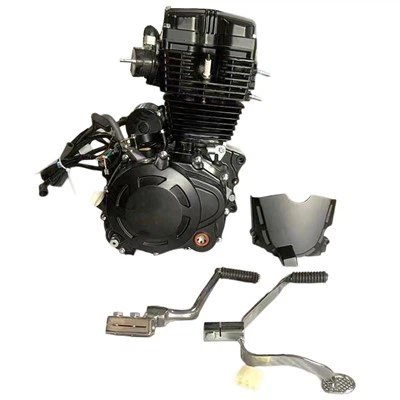
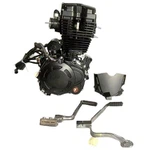
Cg150 Cg200 Cg250 Motorcycle Engine Tricycle Engine With Balance Shaft

Cg150 Cg200 Cg250 Motorcycle Engine Tricycle Engine With Balance Shaft

Motor tricycles are vehicles powered by diesel, gasoline and other fuels. Compared with rickshaws, they have greater power.
Send Inquiry
Product Introduction

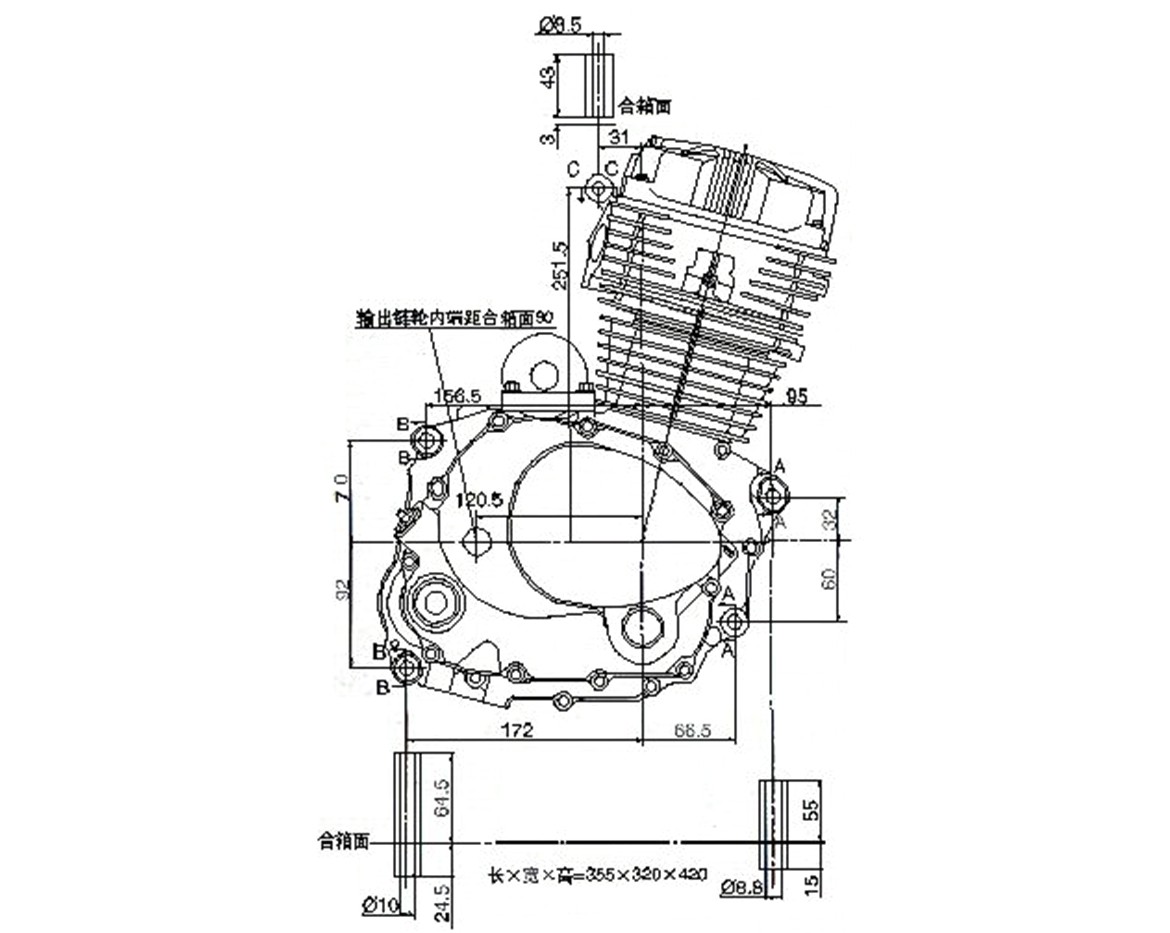
The CG200 motorcycle engine with balance shaft and the CG250 tricycle engine with balance shaft adopt a single-cylinder air-cooled, push-rod valve distribution basic structure, featuring sufficient power, low vibration and strong adaptability.


167FMM(CG250)


Main Technical Specifications

Model:-------------------------------------- 167FMM

Type:-------- Single cylinder,four-stroke,air-cooled

Displacement:ml--------------------------------- 229

Bore x Stroke:mm --------------------------- 67 x 65

Rated Power & Rotating Speed:KW/(r/min)--- 11.0/7500

Max.Torque & Rotating Speed:N.m/(r/min)--- 15.5/6000

ldling Speed:r/min ----------------------- 1500±150

Min.Fuel Consumption:g/KW.h ----------------- ≤ 367

lgnition: -------------------------------------- CDI

Starter: ----------------------------- Electric/Kick

Lubrication: ----------------------- Pressure/Splash

Transmission: ----------------------- 5speed ,Rotary


1


CG125 125CC Motorcycle And Tricycle Engines For Three Wheels

Cg125 125cc Motorcycle And Tricycle Engines For Three Wheels

Model:157FMI
Type:Single cylinder,four-stroke,air-cooled
Displacement:ml124
Bore x Stroke:mm56.5 x 49.5

CG150 150cc Motorcycle Engine FOR ZONGSHEN Enging Assembly

Cg150 150cc Motorcycle Engine For Zongshen Enging Assembly

Model:162FMJ
Type:Single cylinder,four-stroke,air-cooled
Displacement:ml149
Bore x Stroke:mm62 x 49.5

Cg175 175cc Engine For Tricycle Parts Engine

Cg175 175cc Engine For Tricycle Parts Engine

Model:162FMK
Type:Single cylinder,four-stroke,air-cooled
Displacement:ml174
Bore x Stroke:mm62 x 57.5

200CC CG200 Tricycle Engine And Engine Parts

200cc Cg200 Tricycle Engine And Engine Parts

Model:163FML
Type:Single cylinder,four-stroke,air-cooled
Displacement:ml196
Bore x Stroke:mm63.5 x 62.2

ATV Dirt Bike Motorcycle 4 Stroke 250cc CG250 Air-Cooled Engine For YX LF

ATV Dirt Bike Motorcycle 4 Stroke 250cc Cg250 Air-Cooled Engine For Yx Lf

Model:167FMM
Type:Single cylinder,four-stroke,air-cooled
Displacement:ml229
Bore x Stroke:mm67 x 65

CB150 CB200 CB250 Motorcycle Engine With Balance Shaft

Cb150 Cb200 Cb250 Motorcycle Engine With Balance Shaft

Model:163FML
Type:Single cylinder,four-stroke,air-cooled
Displacement:ml196
Bore x Stroke:mm63.5 x 62.2

Motorcycle Engine Assembly CG200 CG250 CG300 Water Cooling Tricycle Engine For 3 Wheels Loncin

Motorcycle Engine Assembly Cg200 Cg250 Cg300 Water Cooling Tricycle Engine For 3 Wheels Loncin

Main Technical Specifications
Model:167FMM
Type:Single cylinder,four-stroke,air-cooled
Displacement:ml229cc

CG125 CG150 Tricycle Engine Water Cool For Three Wheels

Cg125 Cg150 Tricycle Engine Water Cool For Three Wheels

Main Technical Specifications
Model:162FMJ
Type:Single cylinder,four-stroke,air-cooled
Displacement:ml149

Water Cool CG200 CG250 Tricycle Engine Water Cool Three Wheels Engines

Water Cool Cg200 Cg250 Tricycle Engine Water Cool Three Wheels Engines

Main Technical Specifications
Model:163FML
Type:Single cylinder,four-stroke,water-cooled
Displacement:ml196


Motorcycles Engine are generally classified into categories


Engine Type

CC Range

Typical Use

Notes

Single-Cylinder

50-700cc

Small motorcycles, beginner bikes

Economical, simple, great for beginners

Parallel Twin

471-1083cc

Versatile, ranging from city to touring bikes

Lightweight, inexpensive, versatile power delivery

V-Twin

250-2500cc

Cruisers, touring bikes

Powerful, stable, unique sound and aesthetics

Inline Four

600-1000 cc

Sport bikes, high-performance machines

High power and speed, best for experienced riders

Boxer Engine

Varies

Unique configurations, balance and low center of gravity

Stability, used in some touring and unique sport models

Adventure/Off-Road

250-800cc

Adventure touring, off-road and dual-purpose

Balanced power and agility for varied terrains


Product Features

CG150 CG200 CG250 Engine With Reverse Four Wheeler

Balance Shaft Structure
CG250 tricycle engine with balance shaft is equipped with a dual-axis eccentric built-in balance shaft structure, which effectively reduces more than 90% of the mechanical vibration of the engine, runs more smoothly for a long time, and reduces the fatigue of the frame and transmission system.


Heavy-duty Reinforced Cylinder Structure
Good quality 250cc motor uses HT250 high-strength cylinder + high-pressure aluminum alloy shell, with a maximum cylinder diameter of 67mm, which can withstand high combustion pressure and long-term high speed, suitable for heavy-duty freight tricycles or continuous operation in harsh mountainous environments.


Long Life
The engine uses Cr-Mo alloy crankshaft + wear-resistant valve seat + heat-treated rocker arm to ensure stable use for more than 5 years under an average daily operation of 6 hours and high load conditions or over 40,000 kilometers without major repairs.


_20240317191024


Our Factory


At present, the company's products include 50CC---350CC air-cooled and water-cooled series of two-wheeled vehicles, three-wheeled vehicles and some off-road vehicle special engines, which are deeply favored by the market, sold well throughout the country, meet international standards, and are exported to Southeast Asia, Europe and the United States and other foreign markets.


productcate-1-1


FAQ


Q: Is it safe to use engine braking on a motorcycle?

A: Using engine braking on a motorcycle is one of the safest ways to reduce speed without stepping on the service brakes. It can reduce the possibility of skidding on low-traction, slippery roads.


Q: How to keep a motorcycle engine cool in the summer?

A: Check and maintain the coolant level regularly, and flush and replace as recommended by the manufacturer. Using a quality coolant/antifreeze will also help keep engine temperatures down. Check hoses and radiator: Checking hoses and radiators should also be part of your routine maintenance.


Q: How to choose a motorcycle engine?

A: If you don't need a lot of power, we recommend that you choose a single-cylinder or twin-cylinder engine to reduce maintenance costs. This is a good choice if you ride your motorcycle to get off work or ride on the weekends. Novices may be more comfortable riding a single-cylinder or twin-cylinder engine.


Q: What is the formula for a motorcycle engine?

A: You need to know the number of cylinders, bore size, and crankshaft stroke. Calculate the volume of each cylinder using the formula V=π·r^2·h, where r is the bore/2 and h is the stroke, then multiply by the number of cylinders.


Q: What is the lifespan of a motorcycle engine?
A: 12-15 years
The lifespan of a motorcycle engine is affected by many factors, including the quality of the components, riding conditions, motorcycle brand and model, and maintenance frequency. Generally, motorcycle engine lifespans are estimated to be between 50,000-250,000 miles (or 12-15 years).


Q: How to perform a detailed inspection of a motorcycle engine?
A: To professionally clean your motorcycle engine, prepare the necessary cleaning supplies, such as a soft-bristle brush, an air compressor, and a quality degreaser. First, prepare the engine after cooling and remove loose debris. Degrease, scrub, rinse thoroughly, and finally dry and polish.


Q: What are the four principles of an engine?

A: A four-stroke engine is an internal combustion engine that uses four different piston strokes (intake, compression, power, and exhaust) to complete a working cycle. The piston completes two full strokes in the cylinder to complete a working cycle.


Q: What is a basic rule engine?

A: Rule engines automate decision-making processes by applying a series of predefined logical rules to data. These engines evaluate conditions and perform actions based on these evaluations, simplifying complex decision-making or calculation tasks.


Q: What factors can cause damage to motorcycle engines?

A: Lack of routine maintenance is the most common cause of motorcycle engine explosions. Something as simple as not changing the oil or neglecting the air filter can cause engine damage.


Q: Is it safe to clean a motorcycle engine?

A: Do not clean a gasoline motorcycle immediately after a ride
Ideally, wait at least 30 minutes to an hour after a ride to allow the engine and exhaust components to cool to a safe temperature. Flushing a hot engine with cold water can cause damage to the cylinder due to rapid temperature changes.


Q: What are some general maintenance for motorcycles?

A: Oil and filter: Check and change oil and filter regularly.
Tires: Check tire pressure and tread depth; replace tires when worn.
Brakes: Check brake pads and oil level; service as needed.
Battery: Test battery regularly and keep it charged.


Q: What is the basic concept of an engine?

A: An engine consists of a fixed cylinder and a moving piston. The expanding combustion gases push the piston, which in turn rotates the crankshaft. Ultimately, through a system of gears in the drivetrain, this motion drives the wheels.


Q: How do I test the rule engine?

A: Rule Engine: How to Test a Rule
First edit the rule.
Click the Show Test Window control at the top of the screen.
To test the rule with an existing order, enter the order ID and click Load Existing Order.
To test the rule with specific values, fill in the values ​​at the top of the test window.
Click Run Test.


Q: What is the engine displacement of the motorcycle?

A: For first-time motorcycle buyers and new riders, it's easier to narrow down the "right" displacement. You want a motorcycle that provides the full experience, so we recommend a motorcycle with a displacement of at least 300cc.


Q: How does a motorcycle engine work?
A: Motorcycle engines work on the same principle as car engines. They consist of pistons, a cylinder block, and a cylinder head that contains the valve train. The pistons move up and down in the cylinder block, driven by the explosion of the fuel-air mixture ignited by a spark.


Q: How long does a motorcycle engine last?
A: The life of a motorcycle engine is affected by a number of factors, including the quality of the components, riding conditions, the make and model of the motorcycle, and the frequency of maintenance. Generally, motorcycle engine life is estimated to be between 50,000-250,000 miles (12-15 years).


Q: What is the engine displacement of a motorcycle?
A: Engine displacement ranges from around 300cc on the low end to over 1000cc for high-powered cruiser and touring models. For first-time motorcycle buyers and new riders, it's easier to determine the range of "good" displacement for a motorcycle.


Q: How do I know if my motorcycle engine is good?
A: If the engine can run at full speed, it's good. If it can provide the same rpm and load pulling power as before, it's good. The engine can only perform at its best when other parts (such as the air filter, carburetor and exhaust pipe) are clean and the piston rings are good.


Q: Why are motorcycle engines so powerful?
A: Engine displacement describes the total amount of air and fuel that the piston moves or "displaces" within the engine cylinders during each cycle. Motorcycle engines with larger displacement (we measure it in cc) can handle more fuel and air, resulting in more horsepower and torque.


Q: What is a three-wheeler engine?
A: A motorized tricycle, three-wheeled motorcycle or three-wheeled motorcycle is a three-wheeled vehicle based on the same technology as a bicycle or motorcycle, and is powered by an electric motor, motorcycle, scooter or car engine.

Hot Tags: cg150 cg200 cg250 motorcycle engine tricycle engine with balance shaft, China cg150 cg200 cg250 motorcycle engine tricycle engine with balance shaft manufacturers, suppliers, factory, tricycle engine, 110cc atv engine with reverse, cg125 engine, 110 dirt bike motor, cg175 motorcycle engine 175cc, cg125 125cc motorcycle engine

Send Inquiry

whatsapp

Phone

E-mail

Inquiry