

As a reputable supplier of YX 125 motors, I often encounter inquiries regarding the gear ratio of transmissions paired with these powerful engines. Understanding the gear ratio is crucial for optimizing the performance of motorcycles equipped with YX 125 motors, as it directly impacts acceleration, top speed, and fuel efficiency. In this blog post, I will delve into the concept of gear ratio, explain how it relates to the YX 125 motor, and provide insights on how to choose the right gear ratio for your specific needs.
What is Gear Ratio?
Gear ratio is a fundamental concept in mechanical engineering that describes the relationship between the number of teeth on two meshing gears. It is calculated by dividing the number of teeth on the driven gear by the number of teeth on the driving gear. For example, if a driving gear has 20 teeth and a driven gear has 40 teeth, the gear ratio is 40/20 = 2:1. This means that for every one revolution of the driving gear, the driven gear will make half a revolution.
In a motorcycle transmission, the gear ratio determines how the engine's power is transferred to the wheels. Different gear ratios are used to provide different levels of torque and speed. Lower gear ratios (e.g., 1:1 or 2:1) provide more torque, which is useful for starting from a stop, climbing hills, or carrying heavy loads. Higher gear ratios (e.g., 5:1 or 6:1) provide less torque but higher speed, which is ideal for cruising on the highway.
Gear Ratio of the Transmission with the YX 125 Motor
The YX 125 motor is a popular choice for motorcycle enthusiasts due to its reliability, performance, and affordability. The gear ratio of the transmission paired with the YX 125 motor can vary depending on the specific model and application. However, most YX 125 motorcycles come with a 5-speed or 6-speed transmission, which provides a good balance of torque and speed.

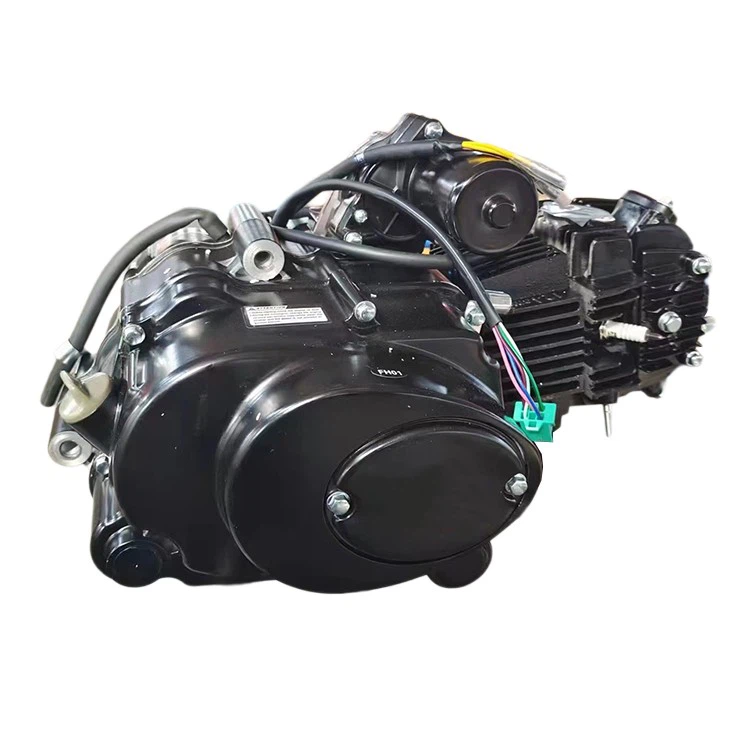
Typically, the gear ratios of a YX 125 transmission are designed to provide optimal performance in a variety of riding conditions. The lower gears are used for starting and accelerating, while the higher gears are used for cruising at higher speeds. For example, a typical 5-speed YX 125 transmission might have the following gear ratios:
- 1st gear: 3.000:1
- 2nd gear: 2.000:1
- 3rd gear: 1.500:1
- 4th gear: 1.200:1
- 5th gear: 1.000:1
These gear ratios allow the motorcycle to start smoothly from a stop, accelerate quickly, and reach a reasonable top speed. However, it's important to note that the actual gear ratios may vary depending on the specific model and manufacturer.
Choosing the Right Gear Ratio
When choosing the right gear ratio for your YX 125 motorcycle, there are several factors to consider, including your riding style, the type of terrain you'll be riding on, and the load you'll be carrying. Here are some general guidelines to help you make an informed decision:
- Riding Style: If you prefer a more aggressive riding style, with lots of acceleration and high-speed riding, you may want to consider a transmission with higher gear ratios. This will allow you to reach higher speeds more quickly and maintain them more easily. On the other hand, if you prefer a more relaxed riding style, with a focus on fuel efficiency and smooth cruising, you may want to choose a transmission with lower gear ratios.
- Terrain: If you'll be riding on hilly or mountainous terrain, you'll need a transmission with lower gear ratios to provide more torque for climbing hills. Conversely, if you'll be riding on flat or relatively level terrain, you can get away with a transmission with higher gear ratios for better speed and fuel efficiency.
- Load: If you'll be carrying a heavy load, such as a passenger or a lot of luggage, you'll need a transmission with lower gear ratios to provide more torque. This will help you start from a stop and accelerate more easily, even with the extra weight.
Other Considerations
In addition to the gear ratio, there are several other factors to consider when choosing a transmission for your YX 125 motorcycle. These include:
- Clutch Type: There are two main types of clutches used in motorcycles: manual and automatic. Manual clutches require the rider to operate a clutch lever to engage and disengage the clutch, while automatic clutches operate automatically. Manual clutches offer more control and a more engaging riding experience, but they can be more difficult to operate, especially for beginners. Automatic clutches are easier to operate, but they may not offer the same level of control as manual clutches.
- Shifting Mechanism: The shifting mechanism of a transmission can also affect its performance and ease of use. There are two main types of shifting mechanisms: sequential and constant mesh. Sequential shifting mechanisms require the rider to shift through the gears in a specific order, while constant mesh shifting mechanisms allow the rider to shift between any two gears at any time. Sequential shifting mechanisms are more common in motorcycles, as they are simpler and more reliable.
- Durability: The durability of a transmission is an important consideration, especially if you plan to use your motorcycle for long-distance riding or off-road adventures. Look for a transmission that is made from high-quality materials and has a reputation for reliability. You may also want to consider a transmission with a warranty to protect your investment.
Related Products
As a supplier of YX 125 motors, we also offer a wide range of other motorcycle engines and parts to meet the needs of our customers. Some of our popular products include:
- 110cc 4 Wheeler Motor for Dirt Bike: This powerful and reliable engine is perfect for dirt bikes and other off-road vehicles. It features a 4-stroke design, automatic transmission, and electric start for easy operation.
- CB150 CB200 Engine 150 Dirt Bike Engine Kit For Yinxiang All Kinds Of Two-wheeled Motorcycles: This high-performance engine kit is designed to fit Yinxiang motorcycles and other two-wheeled vehicles. It includes a CB150 or CB200 engine, carburetor, ignition system, and other components for a complete and easy installation.
- 152fmh 110cc Engine with Fully Automatic: This compact and efficient engine is ideal for small motorcycles and scooters. It features a fully automatic transmission, electric start, and low emissions for a smooth and environmentally friendly ride.
Conclusion
The gear ratio of the transmission paired with the YX 125 motor is an important factor to consider when optimizing the performance of your motorcycle. By understanding the concept of gear ratio and choosing the right gear ratio for your specific needs, you can improve acceleration, top speed, and fuel efficiency. In addition to the gear ratio, there are several other factors to consider when choosing a transmission, including the clutch type, shifting mechanism, and durability. As a supplier of YX 125 motors and other motorcycle engines and parts, we are committed to providing our customers with high-quality products and excellent customer service. If you have any questions or need help choosing the right transmission for your motorcycle, please don't hesitate to contact us. We look forward to working with you!
References
- Motorcycle Engineering: Principles and Practice by John Packham
- Motorcycle Technology by Keith Howard
- The Motorcycle Book by Mark Zimmerman


