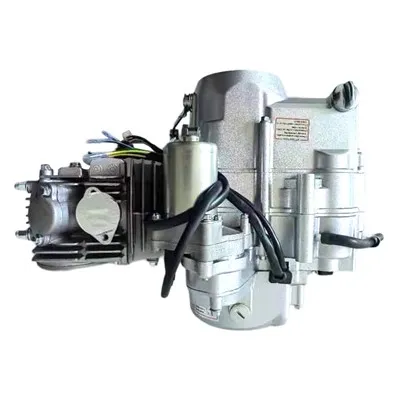
As a supplier of CB200 engines, I often encounter questions from customers about the technical features of our products. One of the most frequently asked questions is whether the CB200 engine has a variable valve timing (VVT) system. In this blog post, I will delve into this topic and provide a detailed answer based on the technical specifications and design principles of the CB200 engine.
Understanding Variable Valve Timing Systems
Before we discuss whether the CB200 engine has a VVT system, it's important to understand what a VVT system is and how it works. A variable valve timing system is a technology used in internal combustion engines to optimize the timing of the opening and closing of the intake and exhaust valves. By adjusting the valve timing according to the engine's operating conditions, such as engine speed, load, and temperature, a VVT system can improve engine performance, fuel efficiency, and emissions.
There are several types of VVT systems, including camshaft phasing, cam profile switching, and fully variable valve actuation. Camshaft phasing is the most common type of VVT system, which adjusts the timing of the camshaft relative to the crankshaft. This allows the engine to change the valve timing without changing the camshaft profile. Cam profile switching systems, on the other hand, use different cam profiles for different engine operating conditions. Fully variable valve actuation systems are the most advanced type of VVT system, which can independently control the timing, lift, and duration of each valve.
Does the CB200 Engine Have a Variable Valve Timing System?
The CB200 engine is a single-cylinder, four-stroke, air-cooled engine designed for motorcycles and tricycles. According to the technical specifications of the CB200 engine, it does not have a variable valve timing system. The engine uses a traditional fixed camshaft design, which means that the valve timing is fixed and cannot be adjusted according to the engine's operating conditions.
The decision not to include a VVT system in the CB200 engine is likely due to several factors, including cost, complexity, and performance requirements. VVT systems are more expensive and complex than traditional fixed camshaft designs, which can increase the cost of the engine and make it more difficult to manufacture and maintain. Additionally, the CB200 engine is designed for general-purpose use, such as commuting and light-duty transportation, where the benefits of a VVT system may not be significant enough to justify the additional cost and complexity.
Performance Characteristics of the CB200 Engine
Although the CB200 engine does not have a VVT system, it still offers a number of performance advantages. The engine is known for its reliability, durability, and fuel efficiency, making it a popular choice for motorcycles and tricycles in many parts of the world.
The CB200 engine has a displacement of 197cc, which provides a good balance between power and fuel efficiency. The engine produces a maximum power output of around 13-15 horsepower, depending on the specific model and configuration. This is sufficient for most general-purpose applications, such as commuting, light-duty transportation, and recreational riding.
In addition to its power output, the CB200 engine also offers good torque characteristics. The engine produces a relatively high torque at low to mid-range engine speeds, which provides good acceleration and drivability. This makes the CB200 engine suitable for stop-and-go traffic and hilly terrain.
Other Technical Features of the CB200 Engine
In addition to its performance characteristics, the CB200 engine also offers a number of other technical features that make it a reliable and efficient powerplant. Some of these features include:
- Air-cooled design: The CB200 engine uses an air-cooled design, which eliminates the need for a complex liquid cooling system. This makes the engine simpler and more reliable, and also reduces the cost of maintenance.
- Four-stroke design: The CB200 engine uses a four-stroke design, which provides better fuel efficiency and lower emissions than two-stroke engines. Four-stroke engines also produce less noise and vibration, which makes them more comfortable to ride.
- Overhead camshaft (OHC) design: The CB200 engine uses an overhead camshaft (OHC) design, which provides better valve control and higher engine speeds than pushrod engines. OHC engines also have a more compact design, which allows for a more efficient use of space in the motorcycle or tricycle.
Related Products and Applications
As a supplier of CB200 engines, we also offer a range of related products and applications. Some of our popular products include:
- Water Cool Cg200 Cg250 Tricycle Engine Water Cool Three Wheels Engines: These water-cooled engines are designed for tricycles and offer improved performance and reliability compared to air-cooled engines.
- Motorcycle Engine Assembly Cg200 Cg250 Cg300 Water Cooling Tricycle Engine for 3 Wheels Loncin: These engine assemblies are designed for motorcycles and tricycles and offer a complete solution for powering your vehicle.
- Cg125 125cc Motorcycle and Tricycle Engines for Three Wheels: These 125cc engines are designed for motorcycles and tricycles and offer a good balance between power and fuel efficiency.
Conclusion
In conclusion, the CB200 engine does not have a variable valve timing system. However, it still offers a number of performance advantages, including reliability, durability, and fuel efficiency. The engine's air-cooled design, four-stroke design, and overhead camshaft (OHC) design make it a reliable and efficient powerplant for motorcycles and tricycles.
If you are interested in purchasing a CB200 engine or any of our other products, please feel free to contact us for more information. We are always happy to answer your questions and provide you with the best possible service.


References
- Manufacturer's technical specifications for the CB200 engine.
- Industry publications and research on variable valve timing systems.
- Customer feedback and reviews on the performance and reliability of the CB200 engine.