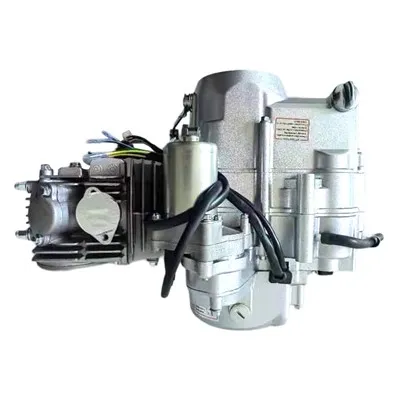
What is the vibration level of a 48cc engine?
As a supplier of 48cc engines, I've received numerous inquiries about the vibration levels of these compact powerhouses. Understanding the vibration characteristics of a 48cc engine is crucial for both manufacturers and end - users, as it impacts performance, durability, and user experience.
Factors Affecting Vibration in a 48cc Engine
-
Combustion Process:
The combustion process in a 48cc engine is a major source of vibration. When the air - fuel mixture ignites in the combustion chamber, it creates a rapid increase in pressure. This pressure force is transferred to the piston, which then moves up and down in the cylinder. The reciprocating motion of the piston generates vibrations that are transmitted throughout the engine and the vehicle it is installed in. The frequency and amplitude of these vibrations depend on factors such as the ignition timing, the quality of the air - fuel mixture, and the compression ratio. -
Engine Design:
The design of the engine plays a significant role in determining the vibration level. A well - designed 48cc engine will have balanced components to minimize vibrations. For example, the crankshaft, which converts the linear motion of the piston into rotational motion, should be properly balanced. If the crankshaft is unbalanced, it can create excessive vibrations, especially at high speeds. Additionally, the use of lightweight yet strong materials in the engine construction can help in reducing the overall weight and inertia, which in turn can reduce vibration.

-
Load and RPM:
The load on the engine and the rotational speed (RPM) also affect the vibration level. When the engine is under heavy load, such as when climbing a hill or carrying a heavy load, the force exerted on the piston and other components increases. This leads to higher vibrations. Similarly, as the RPM increases, the frequency and amplitude of the vibrations can also increase. Different RPM ranges may have different vibration characteristics, and it is important to understand these to ensure smooth operation of the engine.
Measuring Vibration Levels
Measuring the vibration level of a 48cc engine is typically done using accelerometers. These sensors are placed at various points on the engine, such as on the cylinder head, the crankcase, and the mounting points. The accelerometers measure the acceleration of the vibrations in multiple axes, and the data collected can be analyzed to determine the frequency spectrum and the amplitude of the vibrations.
The vibration level is usually expressed in terms of acceleration (usually in meters per second squared, m/s²) or displacement (in millimeters, mm). The acceptable vibration levels for a 48cc engine depend on the application. For example, in a small recreational vehicle, slightly higher vibration levels may be acceptable, while in a more precision - oriented application, such as a generator, lower vibration levels are required.
Managing Vibration in 48cc Engines
As a supplier, we take several measures to manage and reduce the vibration levels of our 48cc engines.
-
Balancing of Components:
We ensure that all rotating and reciprocating components, such as the crankshaft, pistons, and connecting rods, are carefully balanced during the manufacturing process. This helps in minimizing the unbalanced forces that cause vibrations. Advanced computer - controlled balancing machines are used to achieve high - precision balancing. -
Vibration Dampers:
We use vibration dampers in our engines. These are devices that absorb and dissipate the energy of the vibrations. For example, rubber mounts are used to isolate the engine from the vehicle frame. The rubber material has the ability to deform under the influence of vibrations, thereby reducing the transmission of vibrations to the rest of the vehicle. -
Engine Tuning:
Proper engine tuning is essential for minimizing vibrations. This includes adjusting the ignition timing, the fuel injection system (if applicable), and the valve timing. By optimizing these parameters, we can ensure a smooth combustion process, which in turn reduces vibrations.
Comparison with Other Engines
When comparing the vibration levels of a 48cc engine with other engines, such as those in CB150 CB200 Engine 150 Dirt Bike Engine Kit For Yinxiang All Kinds Of Two - wheeled Motorcycles, 110cc 125cc Street Bike Yankee Engine, and 140cc Engine Motor Kit For Pit Bike SSR Coolster 125 CT90 ATC70, several factors come into play.
-
Engine Size:
Larger engines, such as the 150cc and 200cc engines, typically produce more power, but they also tend to have higher vibration levels due to the larger pistons, greater displacement, and higher combustion forces. Smaller engines like the 48cc engine generally have lower vibration amplitudes because of their smaller size and lower power output. -
Design and Application:
The design and application of the engine also influence the vibration levels. For example, a street - bike engine is designed for smooth and efficient operation on paved roads, and it may have better vibration - damping features compared to a dirt - bike engine. A 48cc engine can be found in various applications, such as mini - bikes and small garden equipment, and its vibration characteristics are tailored to these specific uses.
Importance of Vibration Management for End - Users
For end - users, managing the vibration levels of a 48cc engine is important for several reasons.
-
Comfort:
Excessive vibrations can cause discomfort to the operator. For example, in a mini - bike, high vibrations can make the ride unpleasant and fatiguing, especially during long - distance use. By reducing vibrations, we can improve the overall user experience. -
Durability:
High - level vibrations can cause premature wear and tear of engine components. The constant shaking can loosen bolts, damage gaskets, and cause fatigue in the engine structure. By keeping the vibration levels in check, we can increase the lifespan of the engine and reduce maintenance costs. -
Performance:
Vibrations can also affect the performance of the engine. Excessive vibrations can disrupt the smooth flow of the air - fuel mixture, affect the ignition process, and reduce the overall efficiency of the engine. By managing vibrations, we can ensure optimal performance of the 48cc engine.
Conclusion
In conclusion, the vibration level of a 48cc engine is influenced by multiple factors, including the combustion process, engine design, load, and RPM. As a supplier, we are committed to producing 48cc engines with low vibration levels through careful balancing of components, the use of vibration dampers, and proper engine tuning. Understanding the vibration characteristics of these engines is crucial for both manufacturers and end - users, as it impacts comfort, durability, and performance.
If you are in the market for a high - quality 48cc engine or want to learn more about our products, we invite you to contact us for procurement and further discussions. We are dedicated to providing you with the best engines that meet your specific requirements.
References
- "Internal Combustion Engine Fundamentals" by John B. Heywood
- "Vibration Analysis for Rotating Machinery" by Robert B. Randall