

The valve system of a 78cc engine is a critical component that significantly influences the engine's performance, efficiency, and overall functionality. As a leading supplier of 78cc engines, I am excited to delve into the details of this intricate system and shed light on its importance.
The Basics of a Valve System
At its core, the valve system in an engine is responsible for controlling the flow of air and fuel into the combustion chamber and the expulsion of exhaust gases. In a 78cc engine, this system typically consists of intake valves, exhaust valves, valve springs, camshafts, and related components.
The intake valves open to allow a mixture of air and fuel to enter the combustion chamber during the intake stroke. This mixture is then compressed and ignited, creating the power needed to drive the engine. After combustion, the exhaust valves open to release the burned gases from the chamber during the exhaust stroke.
Intake Valves
The intake valves in a 78cc engine are designed to open at the precise moment to admit the optimal amount of air - fuel mixture. The size and shape of the intake valves play a crucial role in determining the engine's volumetric efficiency. A larger intake valve can allow more mixture to enter the chamber, potentially increasing power output. However, this must be balanced with other factors such as valve lift and duration.
Valve lift refers to how far the valve opens from its seat. A greater lift allows more air - fuel mixture to enter the chamber, but it also requires a stronger camshaft profile. Valve duration is the length of time the valve remains open. Longer durations can improve high - speed performance but may reduce low - speed torque.
Exhaust Valves
Exhaust valves are equally important. They need to open quickly and fully to expel the exhaust gases efficiently. If the exhaust gases are not removed effectively, they can create back - pressure, which reduces the engine's power and efficiency. The exhaust valves must also be able to withstand high temperatures and pressures generated during the combustion process.
Valve Springs
Valve springs are essential for maintaining proper valve operation. They ensure that the valves close tightly against their seats after opening. A weak or worn - out valve spring can cause valve float, where the valve does not close properly. This can lead to a loss of power, poor fuel economy, and even engine damage. The stiffness and design of the valve springs are carefully calibrated to match the engine's specifications.
Camshafts
The camshaft is the heart of the valve system. It is a rotating shaft with lobes that push against the valve lifters, causing the valves to open and close at the right times. In a 78cc engine, the camshaft profile is designed to optimize the engine's performance across a range of operating conditions. Different camshaft profiles can be used to achieve different performance characteristics, such as more power at high speeds or better low - end torque.
Types of Valve Systems in 78cc Engines
There are two main types of valve systems commonly used in 78cc engines: overhead valve (OHV) and overhead camshaft (OHC) systems.
Overhead Valve (OHV) System
In an OHV system, the camshaft is located in the engine block. It uses pushrods and rocker arms to transfer the motion from the camshaft to the valves, which are located in the cylinder head. OHV systems are generally simpler and more compact, making them suitable for small engines like the 78cc variety. They also tend to be more cost - effective to manufacture and maintain.
Overhead Camshaft (OHC) System
An OHC system has the camshaft located in the cylinder head. This allows for a more direct operation of the valves, eliminating the need for pushrods. OHC systems can provide better valve control and higher RPM capabilities, which can result in increased power output. However, they are more complex and expensive to manufacture.
Impact of the Valve System on Engine Performance
The valve system has a profound impact on the performance of a 78cc engine. A well - designed valve system can improve power, torque, fuel efficiency, and emissions. For example, by optimizing the valve timing and lift, an engine can achieve better combustion, which leads to more power and less wasted fuel.
On the other hand, a faulty valve system can cause a range of problems. Valve leakage can reduce compression, resulting in poor starting, rough idling, and decreased power. Incorrect valve timing can also lead to inefficient combustion and increased emissions.
Our 78cc Engines and Valve Systems
As a supplier of 78cc engines, we take great pride in the quality and performance of our valve systems. Our engineers carefully design and test each component to ensure optimal performance. We use high - quality materials for the valves, springs, and camshafts to ensure durability and reliability.

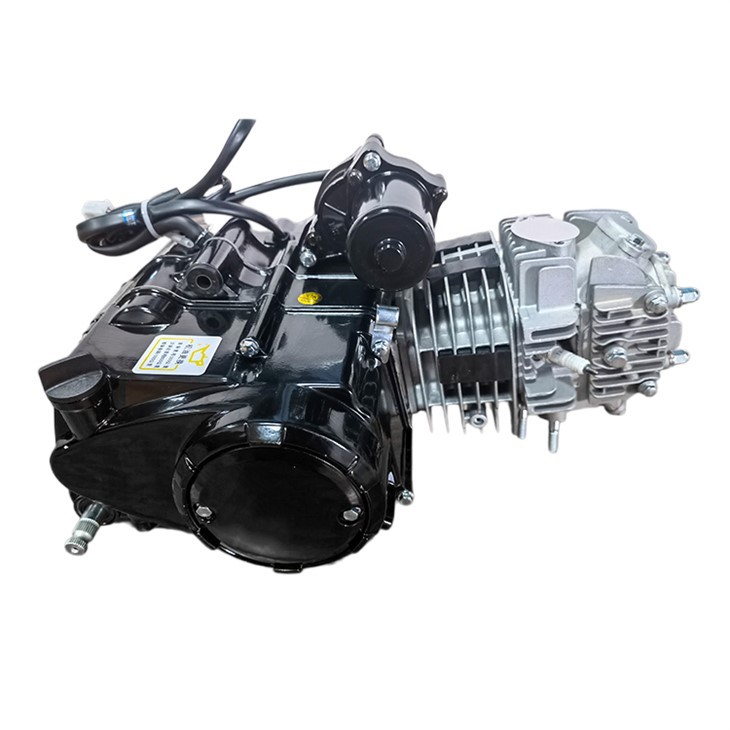
In addition to our 78cc engines, we also offer a wide range of other motorcycle engines, such as the Cd70 Kick Start Engine for Jh70 Motorcycle, the 140cc Engine Assembly for Lifan 140 Air - cooled for Off - road Motorcycle, and the 140cc Engine Motor Kit For Pit Bike SSR Coolster 125 CT90 ATC70. These engines are also designed with advanced valve systems to deliver superior performance.
Contact Us for Procurement
If you are interested in our 78cc engines or any of our other products, we encourage you to contact us for procurement. Our team of experts is ready to assist you in finding the right engine for your needs. Whether you are a motorcycle manufacturer, a repair shop, or an individual enthusiast, we have the products and knowledge to meet your requirements.
References
- Heywood, J. B. (1988). Internal Combustion Engine Fundamentals. McGraw - Hill.
- Taylor, C. F. (1985). The Internal - Combustion Engine in Theory and Practice. MIT Press.


