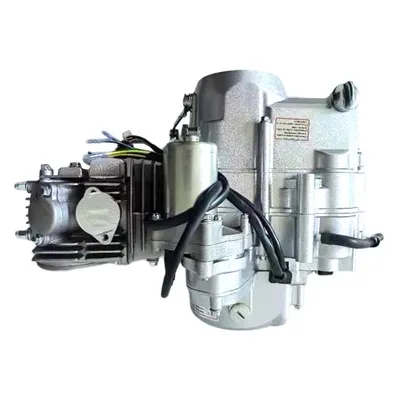
Hey there, fellow motorcycle enthusiasts! As a supplier of motorcycle engines, I've been in the thick of it, dealing with all sorts of engines and their components. One question I get asked a lot is, "What's the deal with the clutch in a motorcycle engine?" Well, let's dive right in and break it down.
First off, what the heck is a clutch anyway? In simple terms, a clutch is like a bridge between the engine and the transmission. It's what allows you to smoothly engage and disengage the power from the engine to the wheels. Without a clutch, shifting gears would be a total nightmare, and you'd probably end up with a whole lot of wear and tear on your engine and transmission.
So, how does it work? When you pull in the clutch lever on your motorcycle, you're actually separating the clutch plates. These plates are usually made of friction material and steel, and they're stacked on top of each other. When the clutch is engaged (lever out), the plates are pressed together by a spring, which allows the power from the engine to be transferred to the transmission. When you pull the lever, the pressure on the plates is released, and they separate, which disconnects the engine from the transmission. This gives you the ability to shift gears without grinding or damaging the transmission.


Now, let's talk about the different types of clutches you might find in a motorcycle engine. The most common type is the wet clutch. This type of clutch is immersed in oil, which helps to cool and lubricate the clutch plates. The oil also helps to reduce wear and tear on the plates, which means they last longer. Wet clutches are typically found in most modern motorcycles, especially those with high-performance engines.
Another type of clutch is the dry clutch. As the name suggests, this type of clutch isn't immersed in oil. Instead, it relies on air cooling to keep the clutch plates from overheating. Dry clutches are usually found in older motorcycles or high-performance racing bikes. They're known for their quick engagement and light feel, but they also tend to wear out faster than wet clutches.
So, why is the clutch so important in a motorcycle engine? Well, for starters, it allows you to control the power delivery from the engine to the wheels. This is especially important when you're starting from a stop or shifting gears at high speeds. Without a clutch, you'd have a hard time getting your motorcycle moving smoothly, and you'd probably end up stalling the engine.
The clutch also plays a crucial role in protecting your engine and transmission. When you shift gears, the clutch helps to absorb the shock and reduce the stress on the transmission. This means that your transmission will last longer and require less maintenance.
In addition to its functional benefits, the clutch can also have a big impact on your riding experience. A well-tuned clutch can make your motorcycle feel more responsive and easier to handle. On the other hand, a worn-out or poorly adjusted clutch can make your motorcycle feel sluggish and difficult to ride.
Now, I know what you're thinking. "This all sounds great, but how do I know if my clutch is in good condition?" Well, there are a few signs to look out for. If you notice that your clutch lever feels spongy or loose, it could be a sign that the clutch plates are worn out or that there's air in the clutch hydraulic system. Another sign is if you have trouble shifting gears or if you hear a grinding noise when you shift. This could be a sign that the clutch isn't disengaging properly.
If you suspect that your clutch is in need of repair or replacement, it's important to have it checked out by a professional mechanic. They'll be able to diagnose the problem and recommend the best course of action.
At our company, we offer a wide range of high-quality motorcycle engines and components, including clutches. Whether you're looking for a 110cc Go Kart Automatic Complete Engine, a 125CC 140CC Kick Electric Start Semi-auto Engine For YX Pit Dirt Bike, or a 140cc Engine Assembly for Lifan 140 Air-cooled for Off-road Motorcycle, we've got you covered.
Our engines are built to last and are designed to provide reliable performance in even the toughest conditions. We use only the highest quality materials and the latest manufacturing techniques to ensure that our engines meet or exceed industry standards.
If you're in the market for a new motorcycle engine or components, we'd love to hear from you. Whether you're a professional racer or a weekend warrior, we can help you find the perfect engine for your needs. Just reach out to us, and we'll be happy to discuss your options and answer any questions you might have.
In conclusion, the clutch is a vital component of a motorcycle engine. It allows you to control the power delivery from the engine to the wheels, protects your engine and transmission, and can have a big impact on your riding experience. If you're having any issues with your clutch, don't hesitate to have it checked out by a professional. And if you're in the market for a new motorcycle engine or components, be sure to check out our selection. We're confident that you'll find the perfect engine for your needs.
References
- Motorcycle Mechanics Handbook, various editions
- Motorcycle Engine Design and Performance, industry - specific publications