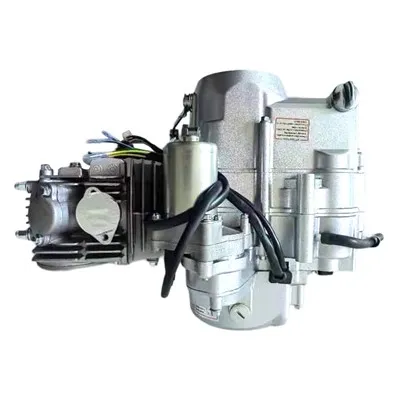
Adjusting the valves on a 140 ATV engine is a crucial maintenance task that can significantly impact the performance and longevity of your vehicle. As a trusted 140 ATV engine supplier, we understand the importance of proper valve adjustment and are here to guide you through the process.


Understanding the Basics of Valve Adjustment
Before diving into the adjustment process, it's essential to understand the role of valves in an engine. Valves control the intake of air - fuel mixture into the combustion chamber and the exhaust of burned gases. Over time, due to wear and tear, the valve clearances can change. Incorrect valve clearances can lead to poor engine performance, reduced power, increased fuel consumption, and even engine damage.
Tools You'll Need
- Feeler gauges: These are used to measure the valve clearances accurately. Make sure you have a set with different thicknesses.
- Socket wrenches: To remove the valve cover and other necessary components.
- Torque wrench: To ensure that you tighten the bolts to the correct torque specifications.
- Owner's manual: This is your best resource for specific information about your 140 ATV engine, including the correct valve clearances and torque settings.
Step - by - Step Valve Adjustment Process
Step 1: Prepare Your ATV
First, ensure that your ATV is parked on a flat surface and the engine is completely cool. Working on a hot engine can be dangerous and may lead to inaccurate measurements. Remove the seat and any other components that are blocking access to the valve cover.
Step 2: Remove the Valve Cover
Using the appropriate socket wrench, carefully remove the bolts holding the valve cover in place. Place the bolts in a safe place to avoid losing them. Gently lift off the valve cover. You may need to use a flat - blade screwdriver to pry it loose if it's stuck.
Step 3: Locate the Valves
Once the valve cover is removed, you'll be able to see the valves. In a typical 140 ATV engine, there are intake and exhaust valves. The intake valves allow the air - fuel mixture to enter the combustion chamber, while the exhaust valves let the burned gases out.
Step 4: Rotate the Engine to the Top Dead Center (TDC)
To ensure accurate valve adjustment, you need to rotate the engine until the piston of the cylinder you're working on is at the top dead center (TDC) of the compression stroke. You can do this by using a socket wrench on the crankshaft bolt. Rotate the engine slowly in the normal direction of rotation until the timing marks on the flywheel or crankshaft align as specified in your owner's manual.
Step 5: Measure the Valve Clearances
Take your feeler gauge and select the appropriate thickness according to the specifications in your owner's manual. For example, the intake valve clearance might be 0.002 - 0.004 inches, and the exhaust valve clearance could be 0.003 - 0.005 inches. Insert the feeler gauge between the valve stem and the rocker arm. If the gauge slides in too easily, the clearance is too large; if it doesn't slide in at all, the clearance is too small.
Step 6: Adjust the Valves
If the valve clearance is incorrect, you'll need to adjust it. Most 140 ATV engines use a lock nut and an adjusting screw on the rocker arm. Loosen the lock nut with a wrench and turn the adjusting screw to increase or decrease the clearance. As you turn the screw, keep checking the clearance with the feeler gauge until it falls within the specified range. Once the clearance is correct, hold the adjusting screw in place and tighten the lock nut.
Step 7: Check the Other Valves
Repeat steps 4 - 6 for all the remaining valves in the engine. Make sure to rotate the engine to the appropriate TDC position for each cylinder before measuring and adjusting the valves.
Step 8: Reinstall the Valve Cover
After all the valves have been adjusted, clean the valve cover and the mating surface on the engine block. Apply a thin layer of gasket sealer if necessary. Carefully place the valve cover back on the engine and tighten the bolts to the specified torque using a torque wrench.
Importance of Regular Valve Adjustment
Regular valve adjustment is essential for maintaining the optimal performance of your 140 ATV engine. By keeping the valve clearances within the correct range, you can ensure that the engine runs smoothly, has good power output, and consumes fuel efficiently. It also helps prevent issues such as valve burning, which can be costly to repair.
Related Products
As a 140 ATV engine supplier, we also offer a range of other high - quality engines. For example, our CB250cc Single Cylinder 4 Stroke Eletric Start Dirt Bike Engine is a powerful and reliable option for dirt bike enthusiasts. Another great product is our Pit Dirt Bike 125cc Electric Start Air Cooled Engine, which is perfect for pit bikes. And if you're looking for an engine motor kit, our 140cc Engine Motor Kit For Pit Bike SSR Coolster 125 CT90 ATC70 is a great choice.
Contact Us for Purchasing
If you're interested in purchasing a 140 ATV engine or any of our other products, we encourage you to contact us for a detailed discussion. Our team of experts is ready to assist you with all your engine - related needs. Whether you're a professional mechanic or an ATV enthusiast, we can provide you with the right engine and support to keep your vehicle running at its best.
References
- ATV Engine Maintenance Manuals
- Automotive Engineering Textbooks