As a supplier of 78cc engines, I've had numerous inquiries about how these engines perform at high altitudes. This topic is not only crucial for our customers who operate in mountainous regions but also for those who are planning off - road adventures in high - elevation areas. In this blog, I'll delve into the science behind engine performance at high altitudes and specifically focus on the performance of our 78cc engines.
The Basics of Engine Performance at Sea - Level
Before we discuss high - altitude performance, it's important to understand how an engine operates at sea - level. A typical 78cc engine, like the ones we supply, is a small yet powerful internal combustion engine. It works on the principle of converting the chemical energy of fuel into mechanical energy through a series of controlled explosions inside the combustion chamber.
The engine draws in a mixture of air and fuel. The air provides the oxygen necessary for the combustion process, while the fuel is the energy source. The piston compresses this mixture, and then a spark plug ignites it, causing a rapid expansion of gases. This expansion forces the piston down, which in turn rotates the crankshaft, producing power.
The Impact of High Altitudes on Engine Performance
At high altitudes, the most significant change is the decrease in air density. As you ascend, the atmospheric pressure drops, and there are fewer air molecules per unit volume. This means that when the engine draws in air, it gets less oxygen compared to sea - level conditions.
For combustion to occur efficiently, a proper air - fuel ratio is essential. Most engines are calibrated to operate at a specific air - fuel ratio at sea - level, usually around 14.7:1 (14.7 parts of air to 1 part of fuel by mass). When there is less oxygen available at high altitudes, this ratio is disrupted. If the engine continues to inject the same amount of fuel as it does at sea - level, the mixture becomes too rich (more fuel relative to the available oxygen). A rich mixture burns inefficiently, leading to several performance issues.
One of the most noticeable effects is a reduction in power output. Since there is less oxygen for combustion, the explosions in the combustion chamber are less powerful. The engine may struggle to accelerate as quickly as it does at sea - level, and it may have difficulty maintaining high speeds. You might also experience a decrease in fuel efficiency because the unburned fuel is wasted.
Another issue is starting problems. A rich mixture can make it harder for the spark plug to ignite the fuel - air mixture, especially in cold conditions at high altitudes. This can lead to longer cranking times or even prevent the engine from starting altogether.
How Our 78cc Engines Adapt to High Altitudes
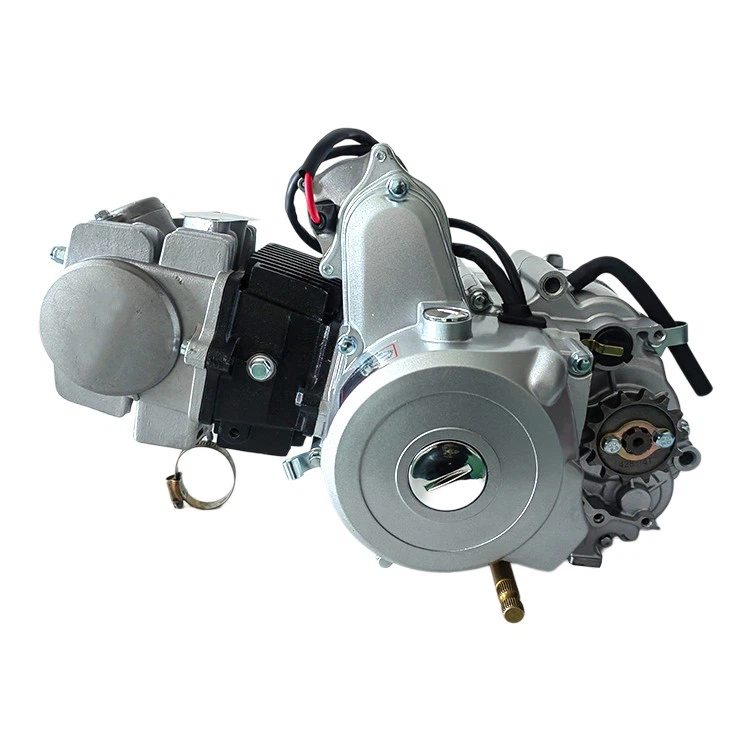
Our 78cc engines are designed with several features to mitigate the effects of high - altitude operation. Firstly, they are equipped with adjustable carburetors. The carburetor is responsible for mixing the air and fuel. By adjusting the carburetor, users can reduce the amount of fuel being injected into the engine at high altitudes. This helps to maintain a more optimal air - fuel ratio, improving combustion efficiency and power output.
We also use high - quality ignition systems. A strong and reliable spark is crucial for igniting the fuel - air mixture, especially when the mixture is less than ideal due to high - altitude conditions. Our ignition systems are designed to produce a consistent and powerful spark, increasing the chances of successful ignition and smooth engine operation.
In addition, our engines have well - engineered air intake systems. These systems are designed to draw in as much air as possible, even in low - density environments. The intake manifolds are shaped to optimize air flow, ensuring that the engine gets the maximum amount of oxygen available at high altitudes.
Real - World Performance of Our 78cc Engines at High Altitudes
We've received feedback from customers who have used our 78cc engines in high - altitude regions. Many have reported that while there is still a slight decrease in power compared to sea - level performance, the engines are still able to operate effectively. For example, in mountainous off - road applications, our engines have been able to power small vehicles up steep slopes, although at a slightly slower pace than on flat, low - altitude terrain.
Customers have also appreciated the ease of adjusting the carburetors. With a few simple adjustments, they were able to improve the engine's performance significantly. This adaptability has made our engines a popular choice for users who need to operate in different altitude conditions.
Comparing with Other Engines
If you're in the market for an engine and considering different options, it's worth looking at some of the alternatives we offer. For instance, our 120cc 125cc Motorcycle Engine with Reverse Gear Assembly for ATV is a great choice for those who need more power. It has a larger displacement, which generally means more power output, but it also faces similar high - altitude challenges. However, like our 78cc engines, it can be adjusted to perform better at high altitudes.
Our Good Quality 100cc Moped Motorcycle Engine for Yamaha is another option. It's a lightweight and efficient engine, suitable for moped applications. While it may not have as much power as the larger engines, it can still be a reliable choice for high - altitude commuting or light - duty off - road use.
For those looking for a more powerful dirt - bike engine, our CB150 CB200 Engine 150 Dirt Bike Engine Kit For Yinxiang All Kinds Of Two - wheeled Motorcycles is an excellent option. With its larger displacement and advanced design, it can handle more demanding high - altitude riding conditions.

Tips for Operating Our 78cc Engines at High Altitudes
If you plan to use our 78cc engine at high altitudes, here are some tips to ensure optimal performance:
- Adjust the carburetor: Before heading to high altitudes, make small adjustments to the carburetor to lean out the fuel - air mixture. You may need to experiment a bit to find the right setting for the specific altitude.
- Use high - quality fuel: High - quality fuel burns more cleanly and efficiently, which can help compensate for the reduced oxygen levels.
- Keep the engine well - maintained: Regular maintenance, such as changing the air filter and spark plug, is even more important at high altitudes. A clogged air filter can further restrict air intake, and a worn - out spark plug can lead to ignition problems.
Conclusion
In conclusion, while high altitudes present challenges for engine performance, our 78cc engines are designed to adapt and perform well in these conditions. Through features like adjustable carburetors, reliable ignition systems, and efficient air intake systems, our engines can still provide a satisfactory level of power and reliability.
If you're interested in learning more about our 78cc engines or any of our other engine products, we encourage you to reach out for a procurement discussion. We're committed to providing high - quality engines and excellent customer service.
References
- Heywood, J. B. (1988). Internal Combustion Engine Fundamentals. McGraw - Hill.
- Taylor, C. F. (1985). The Internal Combustion Engine in Theory and Practice. MIT Press.