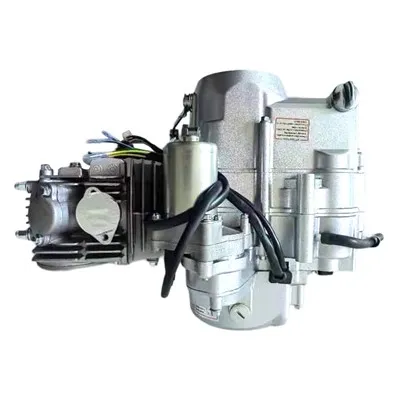
Hey there! As a supplier of 300cc engines, I often get asked about how to adjust the carburetor on these engines. It's a crucial step that can significantly impact the engine's performance, whether you're using it for a motorcycle, a tricycle, or other equipment. In this blog post, I'll walk you through the process in a simple and easy - to - follow way.
Why Adjust the Carburetor?
Before we dive into the actual adjustment process, let's talk about why it's important. The carburetor's main job is to mix the right amount of air and fuel together for combustion in the engine. Over time, factors like changes in altitude, temperature, and wear and tear can throw off this air - fuel mixture. If the mixture is too rich (too much fuel and not enough air), the engine may run rough, produce black smoke, and consume more fuel. On the other hand, if the mixture is too lean (too much air and not enough fuel), the engine may have less power, overheat, and could even cause damage in the long run.
Tools You'll Need
First things first, you need to gather the right tools. Here's what you'll typically need:
- Screwdriver: You'll need a flat - head and a Phillips - head screwdriver. The flat - head is usually used for adjusting the carburetor screws, and the Phillips - head might come in handy for removing any covers or clips.
- Tachometer: This is optional but very useful. A tachometer measures the engine's RPM (revolutions per minute), which helps you make more accurate adjustments.
- Cleaning supplies: A can of carburetor cleaner and some clean rags. Cleaning the carburetor before adjustment can improve its performance and make the adjustment process easier.
Step 1: Preparation
Before you start tinkering with the carburetor, make sure the engine is off and cooled down. Working on a hot engine can be dangerous. Also, disconnect the battery to prevent any electrical issues.
Next, locate the carburetor. On most 300cc engines, it's usually near the air filter and the intake manifold. It's a small, metal device with several hoses and screws attached.
Step 2: Cleaning the Carburetor
As I mentioned earlier, cleaning the carburetor can make a big difference. Start by removing any external dirt or debris with a clean rag. Then, use the carburetor cleaner to spray inside the carburetor. Be careful not to spray the cleaner directly on any electrical components. Let the cleaner sit for a few minutes to dissolve any built - up gunk, and then wipe it clean with a rag.
Step 3: Identifying the Adjustment Screws
Most carburetors have two main adjustment screws: the idle mixture screw and the idle speed screw. The idle mixture screw controls the air - fuel mixture at idle, while the idle speed screw controls how fast the engine runs when it's not under load.
The idle mixture screw is usually located on the side of the carburetor and has a small slot for a screwdriver. The idle speed screw is often located on the throttle linkage.
Step 4: Adjusting the Idle Speed
Start the engine and let it warm up to its normal operating temperature. Use the tachometer to check the engine's RPM. If the RPM is too high or too low, you can adjust the idle speed.
Turn the idle speed screw clockwise to increase the RPM and counter - clockwise to decrease it. Make small adjustments and check the RPM after each turn. Aim for the idle speed recommended in your engine's manual.
Step 5: Adjusting the Idle Mixture
Once you've set the idle speed, it's time to adjust the idle mixture. Start by turning the idle mixture screw clockwise until it gently seats. Then, turn it counter - clockwise a specified number of turns (usually 1.5 to 2 turns, but check your engine's manual for the exact number).
Now, start the engine again. Slowly turn the idle mixture screw in either direction and listen to the engine. You're looking for the point where the engine runs the smoothest and has the highest RPM at idle. Make small adjustments and check the RPM with the tachometer.
If you don't have a tachometer, you can still adjust the mixture by ear. The engine should sound smooth and not sputter or stall.
Step 6: Final Checks
After you've made the adjustments, let the engine run for a few more minutes. Check for any signs of rough running, such as backfiring or hesitation. If the engine still doesn't seem to be running right, you may need to make further adjustments.
Also, check for any leaks around the carburetor. If you notice any fuel or air leaks, you'll need to fix them before the engine can perform at its best.


Other Engine Options
If you're looking for other engine options apart from the 300cc engine, we also offer a variety of engines and engine parts. For example, we have the 200cc Cg200 Tricycle Engine and Engine Parts, which is great for tricycles. The Cg150 150cc Motorcycle Engine for Zongshen Enging Assembly is a reliable choice for motorcycle enthusiasts. And if you need a water - cooled engine, our Water Cool Cg200 Cg250 Tricycle Engine Water Cool Three Wheels Engines is a great option.
Conclusion
Adjusting the carburetor on a 300cc engine may seem a bit daunting at first, but with the right tools and a little patience, you can do it. Remember to always follow the manufacturer's instructions and take your time to make accurate adjustments.
If you have any questions about our 300cc engines or other engine products, or if you're interested in purchasing, feel free to reach out. We're here to help you find the best engine solutions for your needs.
References
- Engine manufacturer's manual
- General automotive repair guides