

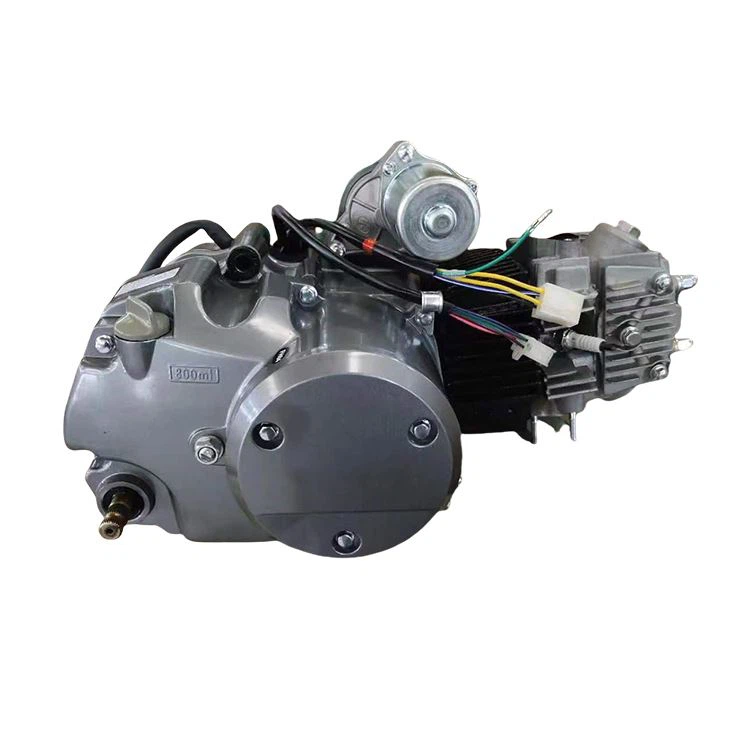
As a supplier of 140 ATV engines, I often receive inquiries from customers about the possibility of installing a turbocharger on a 140 ATV engine. This is a complex and interesting topic that involves not only mechanical knowledge but also considerations of performance, safety, and cost. In this blog post, I'll delve into the details to help you understand whether it's feasible to install a turbocharger on a 140 ATV engine.
Understanding Turbochargers
Before we discuss the installation of a turbocharger on a 140 ATV engine, it's essential to understand what a turbocharger is and how it works. A turbocharger is a forced - induction device that increases an engine's efficiency and power output by forcing extra compressed air into the combustion chamber. It consists of a turbine and a compressor connected by a shaft. The exhaust gases from the engine spin the turbine, which in turn drives the compressor. The compressor then compresses the incoming air and sends it into the engine, allowing more fuel to be burned and thus generating more power.
Feasibility of Installing a Turbocharger on a 140 ATV Engine
Technical Feasibility
From a technical perspective, it is possible to install a turbocharger on a 140 ATV engine. However, it is not a simple plug - and - play process. The 140 ATV engine is designed to operate under certain conditions, and adding a turbocharger will significantly change these conditions.
First, the engine's internal components, such as the pistons, connecting rods, and crankshaft, need to be able to withstand the increased stress and pressure generated by the turbocharger. The 140 ATV engine may not be initially built to handle the extra power and torque. For example, the pistons may need to be upgraded to forged pistons, which are stronger and can better withstand the higher combustion pressures.
Second, the fuel delivery system needs to be adjusted. With a turbocharger, more air is forced into the engine, so more fuel is required to maintain the proper air - fuel ratio. This may involve upgrading the carburetor or installing a fuel injection system that can precisely control the fuel delivery based on the engine's operating conditions.
Third, the cooling system must be improved. The increased power output from the turbocharger generates more heat, and the stock cooling system of the 140 ATV engine may not be sufficient to dissipate this heat. Upgrading the radiator or adding an intercooler to cool the compressed air from the turbocharger can help prevent overheating.
Performance Considerations
Installing a turbocharger on a 140 ATV engine can potentially provide a significant boost in power. However, the performance gain may not be linear. At lower RPMs, the turbocharger may not be fully spooled up, resulting in a delay in power delivery, known as "turbo lag." This can affect the ATV's drivability, especially in situations where quick acceleration is required.
On the other hand, at higher RPMs, the turbocharger can provide a substantial increase in power, making the ATV faster and more capable of handling challenging terrains. But this also means that the ATV's handling characteristics may change, and the brakes and suspension may need to be upgraded to ensure safe operation.
Cost and Safety Considerations
Cost
The cost of installing a turbocharger on a 140 ATV engine can be quite high. In addition to the cost of the turbocharger itself, which can range from a few hundred to several thousand dollars depending on the brand and quality, there are also costs associated with upgrading the engine's internal components, fuel delivery system, and cooling system. Labor costs for the installation can also add up, especially if you don't have the necessary skills and tools to do it yourself.
Safety
Safety is a crucial factor when considering installing a turbocharger on a 140 ATV engine. The increased power and speed can make the ATV more difficult to control, especially for inexperienced riders. There is also a risk of engine damage if the installation is not done correctly or if the engine is not properly maintained. For example, if the air - fuel ratio is not adjusted correctly, it can lead to engine knocking, which can cause severe damage to the engine.
Our Products and Services
As a supplier of 140 ATV engines, we also offer a wide range of other engine products. For example, we have the 150cc Engine Motor Kit For Dirt Trail Bike CROSS Motorcycle, which is suitable for dirt trail bikes and cross motorcycles. This kit provides a reliable and powerful engine option for those looking to upgrade their vehicles.
Another product we offer is the CB150 CB200 Engine 150 Dirt Bike Engine Kit For Yinxiang All Kinds Of Two - wheeled Motorcycles. This engine kit is designed for Yinxiang two - wheeled motorcycles and offers excellent performance and durability.
We also have the 110cc Engine Motor Kit Semi Auto For Honda ATC 70 CT90 CT110 Z50 CRF50 XR, which is a great choice for Honda ATVs and small motorcycles.
Conclusion
In conclusion, while it is technically possible to install a turbocharger on a 140 ATV engine, it is a complex and costly process that requires careful consideration of technical, performance, cost, and safety factors. If you are interested in exploring engine upgrades or purchasing engine products, we are here to assist you. Whether you need a 140 ATV engine or one of our other engine kits, we can provide high - quality products and professional advice. Contact us to start a procurement discussion, and we'll work with you to find the best solution for your needs.

References
- Automotive Engineering: Fundamentals, by John Heywood
- Turbocharging: The Complete Guide, by Corky Bell


