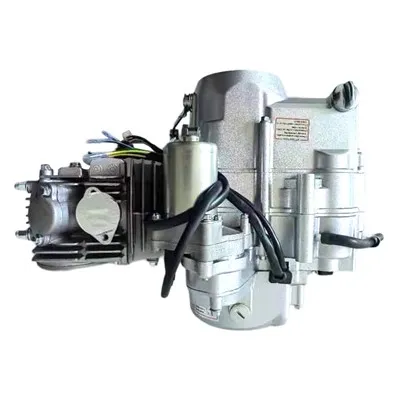
Hey there! I'm a supplier of tricycle engines, and I'm super stoked to take you on a tour of the parts that make up these powerhouses. If you're into tricycles or just curious about how these engines work, you're in the right place.
Let's start with the heart of the tricycle engine: the cylinder block. Think of it as the engine's main framework. It's where the magic happens, with one or more cylinders where the pistons move up and down. The cylinders are like little chambers where the combustion process takes place. The cylinder block also holds the crankshaft, which converts the up - and - down motion of the pistons into rotational motion, and that's what gets your tricycle moving!
Now, the pistons are like the hard - working athletes inside the cylinder. They fit snugly inside the cylinders and are connected to the crankshaft via connecting rods. When the fuel - air mixture inside the cylinder is ignited, it creates a powerful explosion. This explosion pushes the piston down, and through the connecting rod, makes the crankshaft turn. Pistons are usually made of aluminum alloy, which is lightweight but strong enough to withstand the high pressures and temperatures in the cylinder.
The cylinder head sits on top of the cylinder block. It seals the cylinders, and it contains important components like the valves. There are two main types of valves: intake valves and exhaust valves. The intake valves let the fuel - air mixture into the cylinder, and the exhaust valves let the burned gases out after combustion. The cylinder head also has a spark plug (in gasoline engines). The spark plug creates a spark that ignites the fuel - air mixture, starting the combustion process.
The camshaft is another key part. It controls the opening and closing of the valves. The camshaft has lobes, and as it rotates, these lobes push on the valve stems, opening and closing the valves at just the right time. This precise timing is crucial for the engine to run smoothly and efficiently.


Then there's the fuel system. This includes the fuel tank, where you store the gasoline (or other fuel). The fuel pump sends the fuel from the tank to the carburetor (in older engines) or the fuel injector (in modern engines). The carburetor mixes the fuel with air in the right proportion, while fuel injectors spray the fuel directly into the intake ports or cylinders.
The ignition system is what gets the combustion going. In addition to the spark plug I mentioned earlier, it includes the ignition coil, which boosts the low - voltage electricity from the battery to a high - voltage current needed to create a spark at the spark plug. The ignition system also has a distributor (in older engines) or an ignition control module (in modern engines) to make sure the spark happens at the correct time in each cylinder.
The cooling system is vital for keeping the engine from overheating. In smaller tricycle engines, air - cooling is common. The engine has fins on the cylinder and cylinder head, and as the tricycle moves, air flows over these fins, carrying away the heat. Larger engines often use liquid - cooling systems. This involves a radiator, a water pump, and coolant (usually a mixture of water and antifreeze). The water pump circulates the coolant through the engine, absorbing heat. Then the hot coolant goes to the radiator, where it releases the heat to the air.
The lubrication system is like the engine's oiling system. It's all about reducing friction and wear between the moving parts. The oil pan, located at the bottom of the engine, holds the engine oil. The oil pump forces the oil through the engine, lubricating the pistons, crankshaft, camshaft, and other components. There's also an oil filter that removes dirt and debris from the oil, keeping it clean.
The clutch is an important part that allows you to disengage the engine from the transmission. When you want to stop the tricycle or change gears, you press the clutch lever. This disconnects the engine's power from the wheels, so you can shift gears smoothly without grinding the gears in the transmission.
The transmission system transfers the power from the engine to the wheels. There are different types of transmissions in tricycle engines. Some have manual transmissions, where you use a gear shifter to change gears. Others have automatic transmissions, which change gears automatically based on the engine speed and load.
Now, if you're in the market for a tricycle engine, I've got some great options for you. You can check out our Cg150 150cc Motorcycle Engine for Zongshen Enging Assembly. This engine is powerful and reliable, perfect for a range of tricycle applications.
If you need a bit more power, we also have the Motorcycle Engine Assembly Cg200 Cg250 Cg300 Water Cooling Tricycle Engine for 3 Wheels Loncin. These water - cooled engines offer excellent performance and are built to last.
And for those who want an engine with a balance shaft for smoother operation, take a look at our Cb150 Cb200 Cb250 Motorcycle Engine with Balance Shaft.
If you're interested in any of these engines or want to learn more about our tricycle engine offerings, don't hesitate to reach out. We're here to help you find the perfect engine for your tricycle. Whether you're a tricycle manufacturer, a repair shop, or just someone looking to upgrade your ride, we've got the expertise and the products to meet your needs.
In summary, a tricycle engine is a complex but fascinating piece of machinery, made up of many different parts that work together in harmony. From the cylinder block to the transmission, each part plays a crucial role in making your tricycle run smoothly and efficiently. So, if you've got any questions or are ready to start a conversation about purchasing an engine, drop us a line. We're excited to work with you and get your tricycle powered up!
References
- Automotive Engineering textbooks
- Online resources on engine technology